What Should a New Sales Leader Do First? Five Quick Wins
Sales performance improvement

Written by: John Elsey, CEO
Published: October 14, 2026
Quick wins cannot occur without a strategy. A strategy answers three questions: Who does the sales force sell to, what does it sell, and how does it sell?
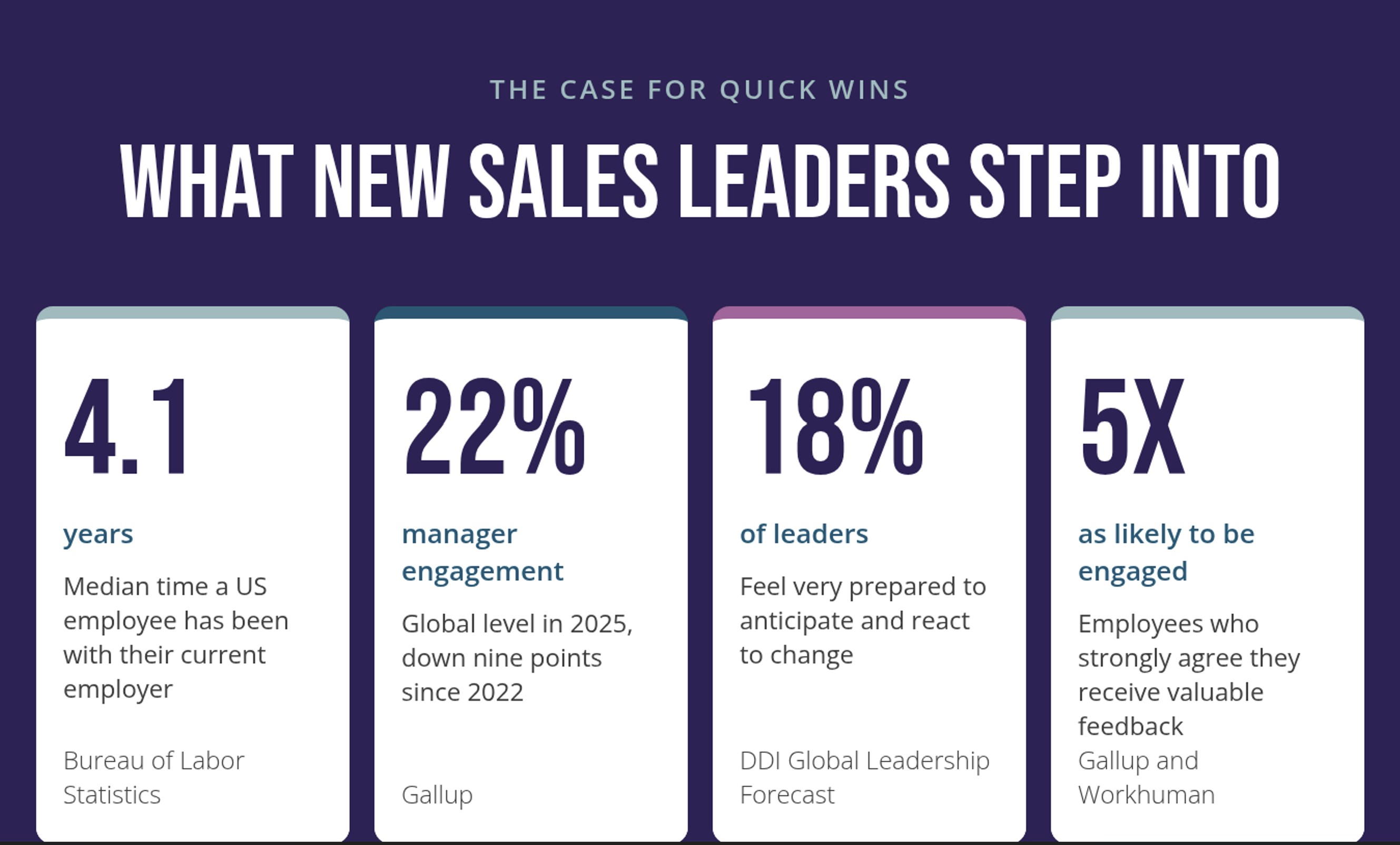
The answers shape account segmentation, channel management, and value chain. They also help new sales leaders keep the sales team driven and cohesive, which builds teams that perform over the long term. That matters because the median US employee has been with their current employer for 4.1 years, according to the Bureau of Labor Statistics. Turnover costs money.
Key Takeaways
- A new sales leader's quickest wins come from communication, which starts right away.
- Drive engagement early by outlining each seller's role and letting them make decisions that give them control.
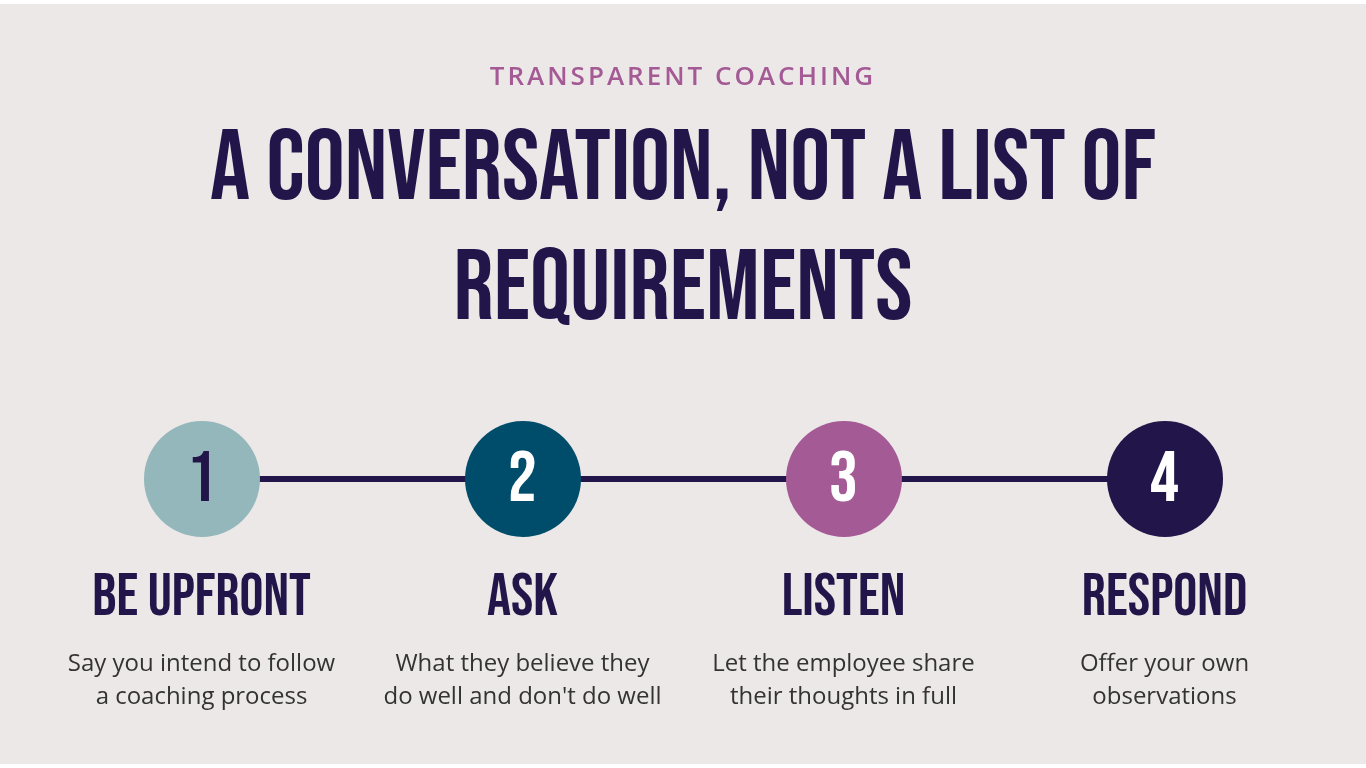
- Support employee goals with transparent coaching: be upfront about the process, ask, listen, then respond.
- Focus on the individual with clear targets early, plus structured and consistent feedback.
- Draft a collaborative definition of success so all efforts drive toward one goal.
Why Do Quick Wins Matter for a New Sales Leader?
The financial implications are only part of the story. Leadership pays an equally important yet less quantifiable cost: high turnover turns a sales leadership role into an attrition management role. Onboarding replacements and getting them up to speed crowds out everything else. That leaves less time to help employees keep pace in a market that grows more complex and competitive.
Managers feel the strain too. Gallup's 2026 State of the Global Workplace report found that global manager engagement fell to 22% in 2025, down nine points since 2022.
Quick wins help new sales leaders build working relationships that last and improve business results.
What Should a New Sales Leader Do First?
Five moves create quick wins. All five rely on communication, so a new sales leader can start right away.
Richardson Sales Performance conducted a survey to understand what separates the most successful new sales leaders from their peers. The findings are in The New Sales Leader's Success Guide.
Communicate a Flexible Approach
Change has always been a factor in business. However, the rate of change is increasing. Leaders are struggling to keep pace: in DDI's Global Leadership Forecast, only 18% of leaders say they feel very prepared to anticipate and react to change. Sales leaders must not only prepare for change; they must also communicate their willingness to change.
Sales leaders can inspire confidence among employees by acknowledging that change is inevitable and critical to success. That means saying that all practices, new or established, are subject to change. Change for the sake of change is not the goal. Instead, sales leaders must show they are open to some change. They can then ask employees what they think will change and how the business should respond.
Drive Engagement Early and Often
Engagement is the answer to employee retention. The best way to engage employees is to let them know you're invested in them. This process begins with communication. Sales leaders should take immediate steps to outline their vision for an employee's role in the company. That gives employees a sense of agency, which empowers them.
This empowerment boosts one's "locus of control," or the degree to which they believe they have control over the outcome of their work. Employees engage more when they feel they hold the wheel. So sales leaders show trust by letting employees to make decisions that give them control. With control comes engagement.
Support Employee Goals
Driving employee performance is about transparent coaching. This means being upfront about your intention to follow a coaching process. This open dialogue fosters trust. Trust matters most to new sales leaders, who often arrive to correct a problem.
Richardson Sales Performance's eBook, Becoming an Effective Sales Coach, explores the idea that sales leaders can help employees perform by sharing knowledge and experience while collaborating in a nonjudgmental way. This approach is direct and without subtext. That is, sales leaders need to engage employees on a personal level. They can start by letting employees share what they know: ask what they believe they do well and don't do well. Sales leaders then need to listen. After the employee has shared their thoughts, sales leaders can respond, offering their observations.
Make it a conversation, not a list of requirements the sales leader dictates.
Put More Focus on the Individual
Every seller works a little differently, so a new sales leader should pay attention to the individual. Sellers want feedback, ongoing learning, and connectedness to work — priorities long held by workers across generations. Sales leaders can engage all three.
Gallup and Workhuman research found that employees who strongly agree they receive valuable feedback from the people they work with are five times as likely to be engaged. Sales leaders can act on this by setting clear targets early and giving structured, consistent feedback. Feedback also feeds the drive for ongoing learning. Sales leaders can go further by mentoring sellers directly or pairing them with another mentor.
Draft a Collaborative Definition of Success
It takes time to form a definition of success supported by unanimous buy-in. Sales leaders have specific numeric goals while employees may have more nuanced "soft" goals. Balancing the two is a challenge. By putting the effort in early, sales leaders set the team up for success because all efforts drive toward one goal.
With numerous people involved, sales leaders need to create a multifaceted goal that touches on various outcomes. Some sales leaders draft or redraft a mission statement to sharpen that definition.
"One of the things that has been most important to me is having a common methodology and even a common vocabulary that we can use to describe where we are in terms of stages in the sales process with all of our team members." — Kristin Krawczyk, senior sales director, Cencora
What Does the Right Communication Look Like?
These five moves produce quick wins because they all run on communication, which starts instantly.
However, more communication is not enough. The right communication faces issues and challenges head-on, with open dialogue that invites different voices, even dissenting ones. Some team members will volunteer their thoughts. Others will be reserved. Sales leaders must ask questions to understand where everyone stands.
These quick wins also push the leader to go further, and employees need that. The reason: talent begets talent.