How Industrial Companies Align Sales Teams After a Merger or Acquisition
Sales performance improvement

Written by: Ben Taylor, MBA, Content Marketing Manager, Richardson
Published: October 16, 2026
Geopolitical pressure and supply chain risk are pushing industrial companies toward M&A, and they're buying the automation and productivity capabilities they need to grow. Global industrials and services M&A values rose by 19% in 2025, according to PwC, as companies shed legacy or non-core operations for higher-growth, technology-enabled businesses riding the AI infrastructure build-out.
Yet while post-M&A operational integration of plants, logistics, and systems receives intense focus, sales team integration gets less attention. After an acquisition, leaders find themselves managing sales teams made up of individuals with vastly different tenures, experiences, and selling approaches. Getting those teams to work as one commercial organization is one of the most overlooked parts of integration.
Key Takeaways
- Operational integration alone does not create commercial alignment — combined systems and structures do not translate into consistent selling in the field.
- Inconsistent selling approaches confuse customers about capabilities, cause sellers to miss cross-sell and upsell opportunities.
- The fix is a unified sales framework — a shared playbook that lets every seller, regardless of tenure or legacy company, operate from the same approach.
Why doesn't operational integration fix sales performance on its own?
Most industrial organizations approach integration as an operational challenge. Boards and executive teams expect the sales function to adapt naturally as the integration takes place, but sales performance does not improve just because companies combine systems and structures.
After an acquisition, the harder job is aligning how sellers engage customers, not just integrating organizations. In many industrial companies, sales teams include individuals with decades of experience alongside newer hires still developing their commercial capabilities, and an acquisition sharpens those differences. Legacy teams bring different approaches to account management, and outreach varies widely across product lines, leaving customer conversations without a shared structure. The company has one brand and several sales cultures.
The stakes are especially high in the industrial sector, where relationships and trust play a central role in purchasing decisions. Industrial customers rely on long-term suppliers for technical expertise, operational reliability, and strategic collaboration. When sales teams sell inconsistently, customers hear conflicting messages about capabilities, sellers miss cross-sell and upsell opportunities, new sellers can't copy what high performers do well, and knowledge stays locked in individual heads.
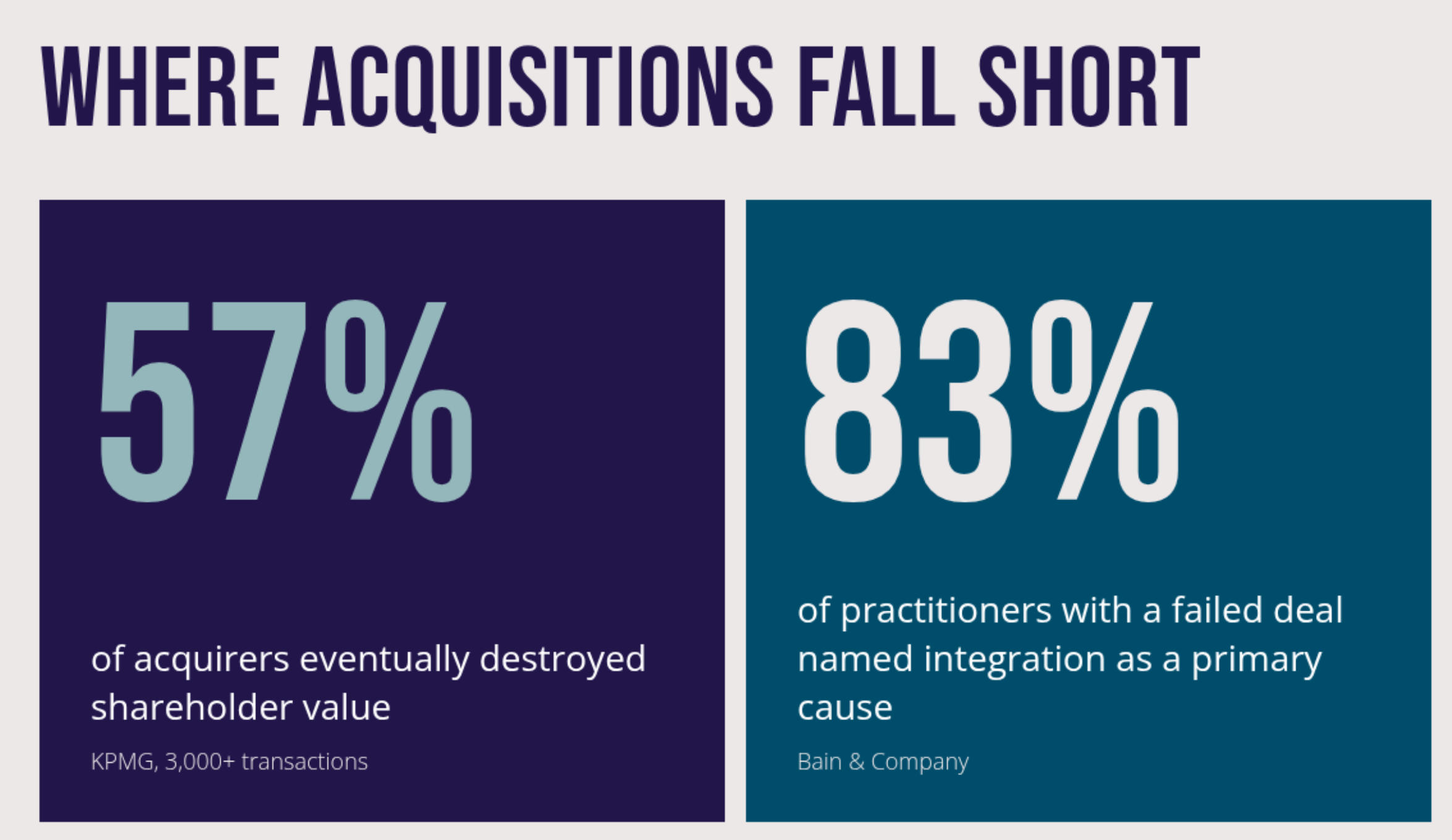
KPMG's research covering more than 3,000 transactions found that 57% of acquirers eventually destroyed shareholder value. Bain & Company found that integration is a primary cause 83% of the time deals fail.
What does inconsistent selling look like to a customer?
Imagine a long-standing industrial customer working with a supplier that just completed an acquisition. For years, the customer relied on a trusted sales representative who understood their operations, saw problems coming, and fixed them fast.
After the acquisition, that customer begins interacting with multiple representatives from the newly combined organization. Each brings a different perspective. Each describes the company's capabilities in their own words and runs the conversation their own way.
The customer expected a stronger partner and finds a fragmented organization. Uncertainty grows over time, and the customer starts to question whether the supplier truly understands their business — and whether another provider would be more consistent. Customers expect consistency, expertise, and value, and misalignment costs growth.
What does a unified sales framework actually involve?
Industrial organizations that get post-M&A sales integration right build alignment on a shared approach to how sellers engage customers, not on structural changes alone.
Leading organizations establish a unified sales framework that helps teams, regardless of tenure or background, operate from the same playbook. That framework focuses on four things: creating consistency in customer conversations, capturing and sharing best practices from high-performing sellers, helping core team members develop consultative selling capabilities, and enabling sellers to position the full breadth of the combined portfolio.
When sales teams adopt a shared framework, individual selling styles give way to one coordinated approach. Customers feel the difference, and new and legacy sellers alike capture the growth the deal was meant to deliver.
What does this look like in practice?
A Canadian industrial company with operations across fuels, lubricants, and related services needed to align its customer-facing teams as the organization grew. With a diverse sales organization representing different business lines and levels of experience, the company wanted its teams to engage customers with a consistent and effective approach.
Working with Richardson, the company implemented a structured sales framework designed to strengthen consultative engagement with customers. The initiative focused on helping sellers hold deeper conversations with customers about operational challenges, identify opportunities to provide greater value across product and service offerings, and align their approach to customer interactions across the organization.
By establishing a common sales methodology, the company gave its teams a more consistent way to serve customers and a stronger ability to uncover and address their needs. A similarly restructured manufacturing organization that built its sales capabilities with Richardson saw organic sales growth increase 5% and new hires exceed their revenue targets by $75M combined — proof that a shared framework accelerates both legacy and new sellers, not just one group.
What should industrial leaders prioritize first?
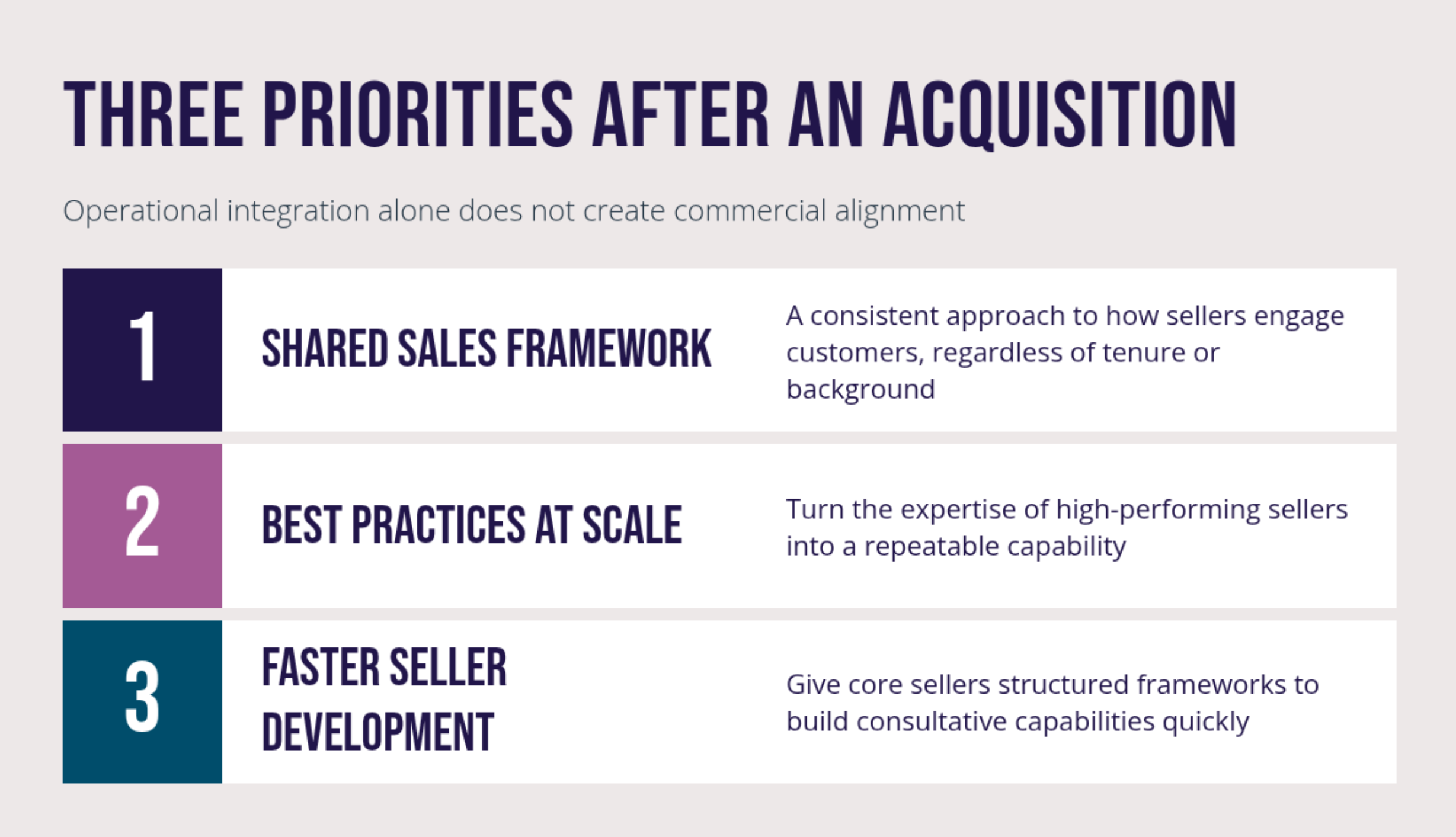
Industrial leaders pursuing growth through M&A should start from one fact: operational integration alone does not create commercial alignment. To capture an acquisition's growth potential, organizations need to change how their sales teams operate, starting with three priorities:
- Create a shared sales framework. Establish a consistent approach that guides how sellers engage customers, regardless of tenure or background.
- Capture and scale best practices. Turn the expertise of high-performing sellers into a repeatable capability across the organization.
- Accelerate development of promising sellers. Give core sellers structured frameworks to build consultative capabilities quickly.
When organizations align their sales teams around a shared playbook, they get what the deal promised: one commercial organization with stronger customer relationships and sustained growth.