What’s the Difference? Prospect vs. Lead vs. Opportunity
Prospecting

Written by: Ben Taylor, MBA, Content Marketing Manager, Richardson
The words lead, prospect, and opportunity are often used as if they mean the same thing. But each describes a different type of potential customer. Mixing them up wastes time and slows down sales.
We define these three terms based on what the buyer actually does – not on assumption or hope. Clear definitions help sellers see which deals are real and which still need work.
Defining a Lead vs. a Prospect vs. an Opportunity
Clear definitions help everyone on a sales team speak the same language. They make it easier to plan next steps, track progress, and coach sellers. Each term describes how ready a buyer is and what the seller should do next.
What is a Lead?
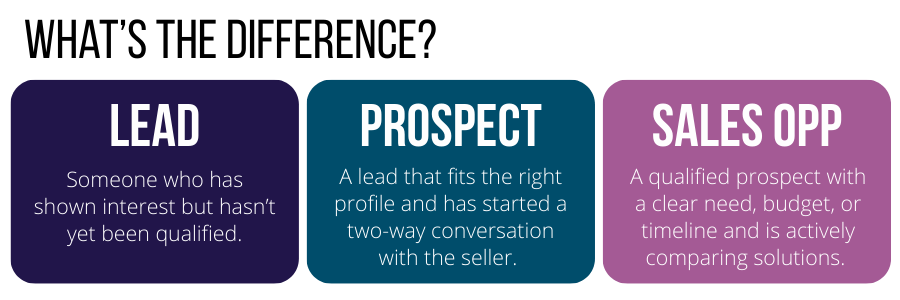
Definition: A lead is someone who has shown interest but hasn’t yet been qualified. They might have filled out a form, attended an event, or downloaded content.
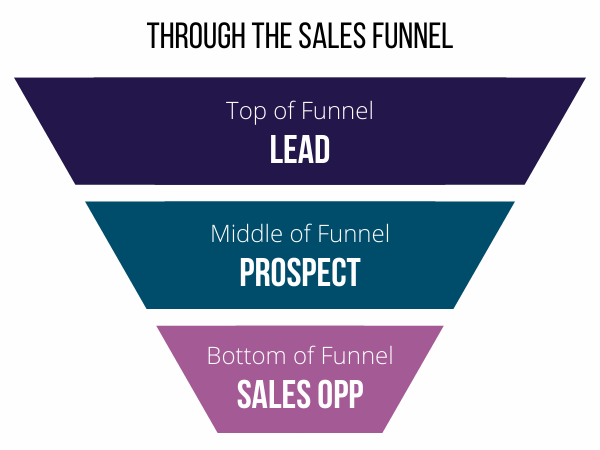
Stage in funnel: Top of the sales funnel.
Buyer characteristics:
- May have limited information or contact details.
- Shows initial curiosity but may not be ready to buy.
- Might not be the right fit for your solution.
Seller focus:
- Confirm fit with the ideal customer profile.
- Identify whether the lead has influence or authority.
- Decide if the lead is worth more time and outreach.
What is a Prospect?
Definition: A prospect is a lead that fits the right profile and has started a two-way conversation with the seller.
Stage in funnel: Middle of the sales funnel.
Buyer characteristics:
- Matches your target company size, industry, or role.
- Engages in early discussions and shares business needs.
- Is beginning to evaluate potential solutions.
Seller focus:
- Build trust through relevant and informed conversation.
- Learn the buyer’s priorities, challenges, and goals.
- Offer insights that help the buyer see their problem differently.
What is a Sales Opportunity
Definition: A sales opportunity is a qualified prospect with a clear need, budget, or timeline and is actively comparing solutions.
Stage in funnel: Bottom of the sales funnel.
Buyer characteristics:
- Involves multiple stakeholders, such as procurement or finance.
- Shows strong intent to purchase but may still hesitate.
- Needs confidence in both the value and the outcome. Seller focus
Seller focus:
- Help the buyer weigh options and make a confident decision.
- Communicate the cost of inaction and highlight measurable value.
- Guide the group toward alignment and next steps.
From Lead to Prospect to Opportunity
The path from lead to prospect to opportunity follows a natural pattern that happens in nearly every sale. Each stage shows more engagement from the buyer and a more focused response from the seller.
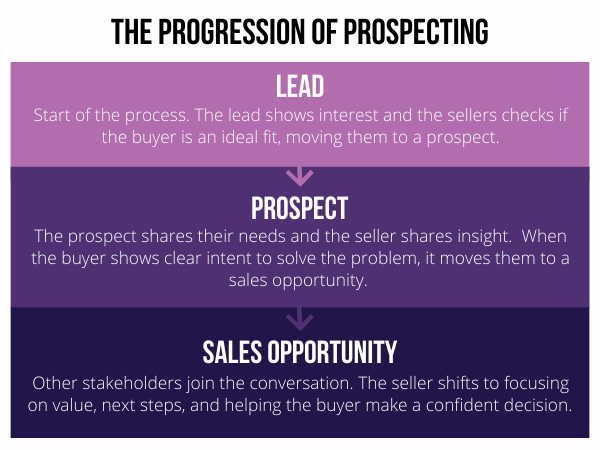
A lead starts the process by showing interest, like filling out a form or downloading a report. The seller checks if the buyer is a good fit: someone in the right industry, company size, or with a problem the seller can solve.
Once the seller confirms that fit and starts a two-way conversation, the lead becomes a prospect. This is when the buyer starts sharing more about their needs. The seller listens, asks questions, and shares insights that help the buyer think about their challenge in new ways.
The process becomes a sales opportunity when the buyer shows clear intent to solve the problem. This is usually when other people, like procurement or finance, join the conversation. The seller’s focus shifts to showing value, explaining next steps, and helping the buyer make a confident decision.
Each stage depends on clear signals from both sides. The buyer’s interest grows from curiosity to commitment, and the seller’s role changes from checking fit to exploring needs, to guiding a decision.
However, data from Forrester shows that 86% of B2B purchases stall at some point in the buying process, often because too many people are involved or internal alignment breaks down. Sellers must help buyers understand what’s at risk if they don’t act and show how the solution adds value. Yet nearly 40% of sellers in our 2025 Selling Challenges Research Study said it’s hard to explain the cost of doing nothing. Clear criteria help sellers recognise when to guide buyers past indecision and toward commitment.
Why Clear Definitions Matter in Sales
When sales teams don’t agree on what makes someone a lead, a prospect, or an opportunity, the sales process starts to break down. Sellers may chase contacts who aren’t ready to buy, and managers may rely on data that doesn’t tell the full story.
Our research found that 37% of sellers struggle to reach decision-makers. This often happens because the early stages of the pipeline aren’t defined clearly. Clear definitions keep sellers focused on genuine opportunities and make sales data more useful for planning.
Strong definitions make a difference across the sales organisation:
- Better forecasting: When everyone uses the same criteria, leaders can predict results based on buyer actions, not guesses.
- Smarter outreach: Sellers can tailor their messages – short introductions for leads, deeper talks for prospects, and decision-focused discussions for opportunities.
- Smoother handoffs: Marketing can pass along higher-quality leads, and sales can focus on buyers that show real intent.
- Clearer coaching: Consistent definitions make it easier for managers to spot where deals stall and help sellers improve the right skills.
Together, these benefits make the sales process more accurate and easier to manage. Everyone understands what progress looks like, and every deal in the pipeline reflects where the buyer truly stands.
How to Lead Conversations with a Prospect vs. a Lead
The main difference between a lead and a prospect is how ready they are to talk about buying. A lead has shown some interest but may not know much about your solution. A prospect has already started engaging and wants to learn more.
Many sellers use the same message for both, but that often backfires.
With a lead, the goal is validation. Confirm that the buyer is a good fit and that their interest is real. Keep messages short and relevant, focused on shared industry challenges. Asking about budgets or timelines too early can make the conversation feel rushed.
With a prospect, the goal is insight. Once the fit is confirmed, shift from exploration to education. Share ideas, examples, or data that help the buyer see their challenge in a new way.
By adjusting the focus of each conversation, sellers can meet buyers where they are and move them forward naturally without skipping steps or pushing too fast. Richardson’s Consultative Selling methodology reinforces this progression by helping sellers move naturally from relevance to insight.
How to Lead Conversations with a Prospect vs. an Opportunity
The move from prospect to opportunity happens when a buyer goes from exploring ideas to deciding what to do next. A prospect is still learning. An opportunity is ready to compare solutions. Knowing this difference helps sellers ask better questions and use the right tone.
Many sellers lose momentum because they treat prospects and opportunities the same way. They keep asking discovery questions even after the buyer is ready to choose. At that point, buyers don’t need more details; they need confidence to decide.
With a prospect, the goal is understanding. Help the buyer define the problem and see the impact of not solving it.
With an opportunity, the goal is a decision. The buyer already knows the need. Now the seller helps them evaluate options, compare solutions, and align the team involved in the choice.
Gartner’s research on B2B buying behaviour shows that sellers who provide useful information to help buyers complete their decision-making steps are 2.8× more likely to make the purchase feel easy and 3× more likely to close a larger deal with less regret. Guiding buyers through these stages builds confidence and strengthens long-term relationships.
Knowing whether you’re talking to a prospect or an opportunity helps you match your approach to the buyer’s mindset. That precision builds trust and keeps the deal moving.

Turn Interest into Progress with Precise Definitions
Clear language leads to clear action. When everyone on a sales team agrees on what lead, prospect, and opportunity mean, it removes confusion and makes the process easier for both sellers and buyers. Every conversation has a clear purpose—to confirm interest, understand needs, or guide a decision.
Sellers who know the difference between early curiosity and real intent can focus their time where it matters most. They spend less energy chasing unqualified leads and more time helping serious buyers move forward.
At Richardson, we help sales teams build that clarity through our Win Opportunities programme set. They connect what buyers do to what sellers say and do next, turning interest into measurable progress and progress into lasting performance.