How Financial Institutions Can Turn Service Interactions into Growth
Sales performance improvement

Written by: Ben Taylor, MBA, Content Marketing Manager, Richardson
Published: November 3, 2026
Financial clients now expect financial services interactions to be fast, personalised, and proactive. In response, many institutions have focused on reducing friction in customer interactions, resolving issues faster, and simplifying processes. From AI-enabled service channels to modern digital banking platforms, organisations realised that they needed to redesign how customers interact with them or fall behind.
Emerging technology has added to this challenge by introducing a new group of competitors, including digital-native banks and investment platforms that operate exclusively through digital channels, and fintechs that specialise in one part of the value chain.
Yet as digital transformation aims to elevate the customer experience across the industry, an important question emerges: If everyone is improving customer experience, how do financial institutions truly differentiate?
Key Takeaways
- Financial institutions grow existing relationships by treating every service interaction as a chance to uncover broader client needs, not just resolve the immediate issue.
- Service interactions surface early signals about changing financial needs, but professionals rarely capture those signals or turn them into proactive conversations.
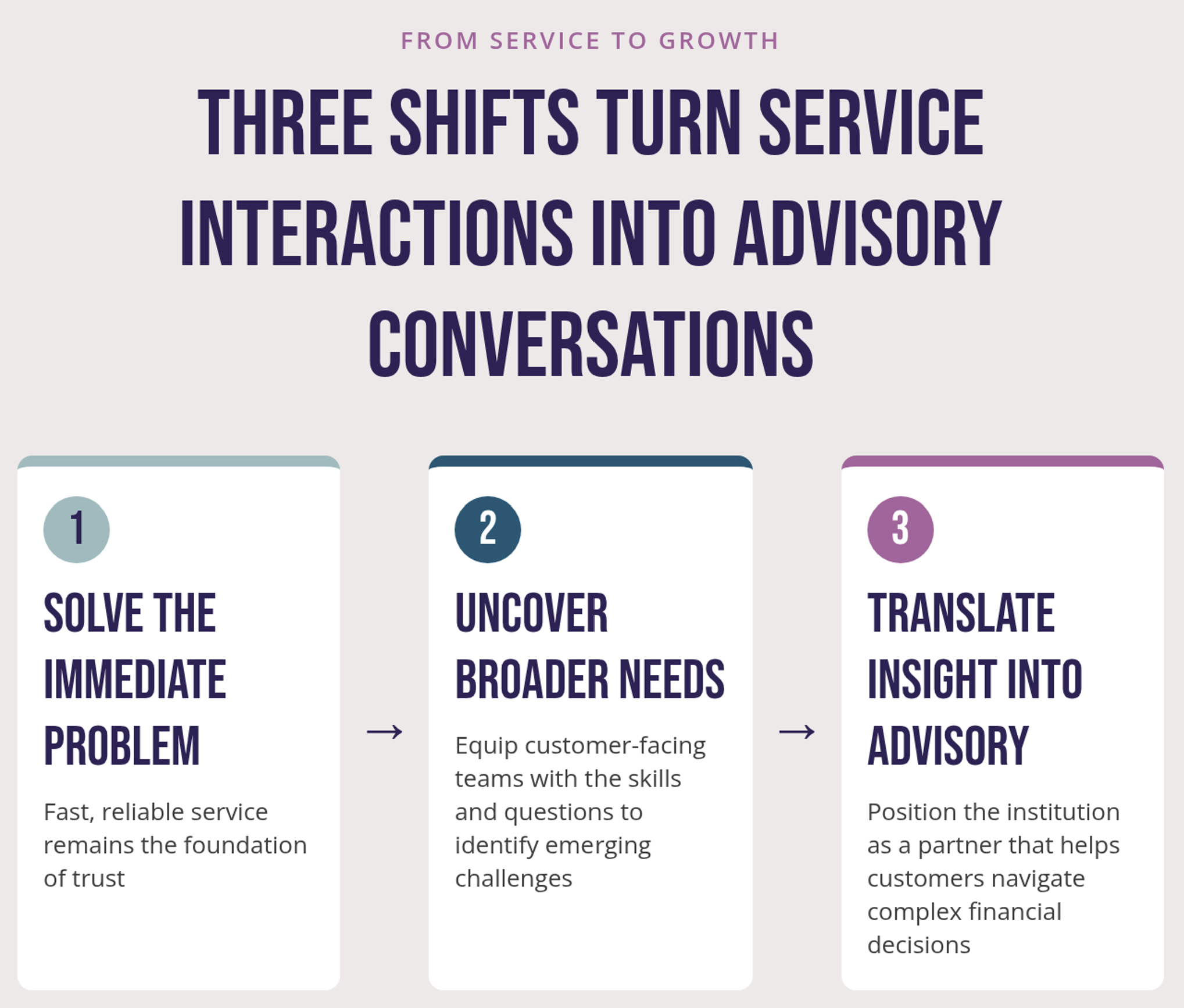
- Leading institutions make three shifts: solve the immediate problem, use the interaction to uncover broader needs, and translate insight into advisory engagement.
Why Is a Better Customer Experience No Longer Enough?
Most financial institutions treat customer experience as a service quality initiative: make interactions easier and faster by resolving issues quickly, reducing wait times, improving digital self-service, and streamlining account management.
These improvements are important, but they focus on removing friction from transactions, not strengthening the relationship with the customer. In other words, many organisations view customer experience as a way to protect the relationship, rather than a way to grow it.
Satisfaction doesn't ensure loyalty. A Deloitte survey of 2,027 US banking customers found satisfaction between 93% and 95% across every generation, yet Gen Z and millennials showed the highest risk of switching from their primary bank.
The stakes for getting this right are high. In financial services, growth increasingly depends on expanding relationships with existing clients, not simply acquiring new ones. However, many institutions struggle to identify expansion opportunities early enough.
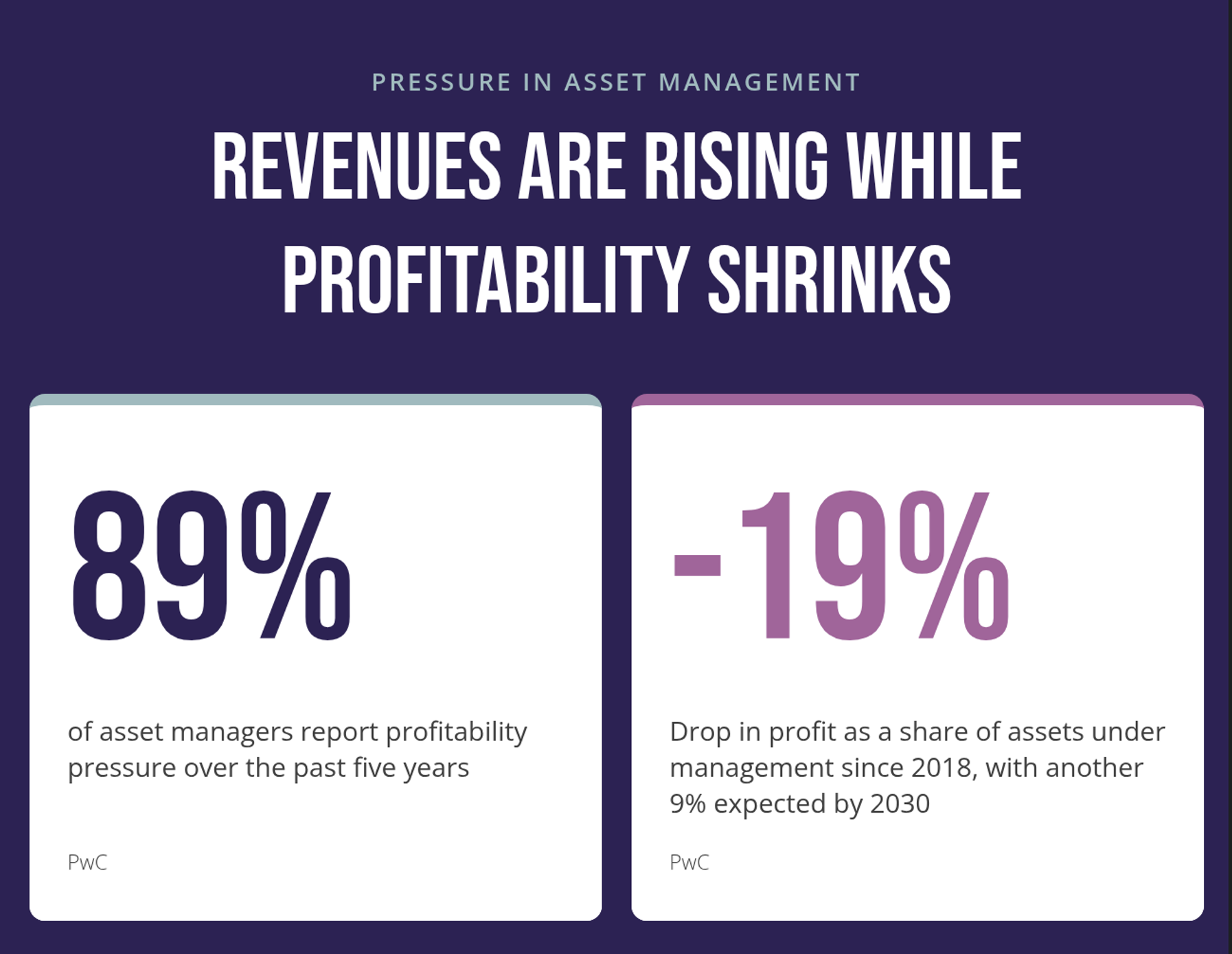
As a result, financial services quickly become commoditised as customers look for the lowest-cost option. This dynamic is even present in asset management, where revenues are rising, but 89% of asset managers report profitability pressure over the past five years, according to PwC.
This problem is likely to continue. Profit as a share of assets under management has fallen roughly 19% since 2018, and PwC expects it to drop another 9% by 2030.
What Do Service Interactions Reveal About Clients?
The real opportunity is not simply improving customer experience. It is using service interactions to uncover unmet needs. Every service interaction reveals something about the customer: operational challenges, emerging financial needs, changing priorities, or potential risks.
Consider the dynamics:
- Customers interact frequently with service teams, relationship managers, and advisors.
- These interactions surface early signals about changing financial needs.
- Yet professionals rarely capture or translate those signals into proactive conversations.
When handled effectively, solving a customer issue does more than resolve the immediate problem. It builds credibility. And credibility creates a powerful moment: the opportunity to shift from problem solver to trusted advisor. Organisations that recognise this moment can transform routine service interactions into conversations that expand the relationship.
What Happens When Teams Miss the Customer's Signals?
Imagine a client calling their financial institution with an operational issue.
The representative resolves the problem quickly. The client is satisfied. The interaction ends. From the institution's perspective, the service experience was successful. But what if that same interaction revealed something deeper — perhaps the client is struggling with cash flow volatility, preparing for expansion, or navigating new regulatory requirements?
If no one explores those signals, the opportunity disappears. Weeks later, the client begins working with another provider who helps them address those broader needs. The institution solved the problem but missed the moment to deepen the relationship and drive growth.
Opportunities emerge only when customers begin exploring solutions elsewhere. By the time the institution recognises the need, competitors are already engaged in the conversation.
How Do Leading Institutions Turn Service into Advisory Conversations?
Leading financial institutions are beginning to treat customer experience differently. Rather than viewing service interactions as isolated events, they see them as entry points into deeper advisory conversations. Clients often want that human conversation. A 2021 Deloitte survey of about 3,000 US consumers found that many want high-touch interactions for complex products and services, such as mortgages and financial advice.
This approach focuses on three shifts:
- Solve the immediate problem effectively. Fast, reliable service remains the foundation of trust.
- Use the interaction to uncover broader needs. Equip customer-facing teams with the skills and questions needed to identify emerging challenges.
- Translate insight into advisory engagement. Position the institution as a partner that helps customers navigate complex financial decisions.
Richardson's Consultative Selling methodology builds the second shift through Questioning, one of its Six Critical Skills, which develops the ability to explore needs and create dialogue. Richardson also delivers customised, industry-specific sales training to financial services teams.
When organisations make this shift, customer experience becomes more than operational excellence — it becomes a competitive growth engine. Every resolved issue becomes an opportunity to deepen trust, strengthen the relationship, and expand the scope of services delivered.
What Results Can Behaviour-Driven Selling Deliver in Financial Services?
A global financial services company with a broad set of solutions in credit, fraud, and identity management serves millions of customers. It realised it needed a more behaviour-driven approach to sales execution.
Its sellers needed more than just training. They needed lasting behaviour change, integrated into daily workflows, that equipped them to connect to buyer pain. Leadership also recognised that performance lift would require alignment and tight collaboration between enablement, management, and frontline teams, all speaking a common selling language.
Capital Farm Credit, a Richardson client, describes the value of that shared language:
The company partnered with Richardson to train 400+ sellers, equipping them with the skills to drive stakeholder consensus, mitigate risk, differentiate unique value, and focus on high-impact activities at the right moments in the sales cycle.
"The biggest value that working with Richardson has brought Capital Farm Credit is the language of sales across the organization. Richardson gave us a common language and a common vocabulary and allowed us to start to centralize some of those different metrics."
— Phil Peabody, chief lending officer, Capital Farm Credit
Several factors led to these results:
- Manager-led reinforcement: Opportunity Reviews became part of the standard coaching cadence.
- Enablement collaboration: Sales enablement directors partnered closely with frontline managers to sustain behaviour change.
- Tool-integrated execution: The company implemented a digital learning platform that embeds selling skills into daily workflows through guided learning, real-time coaching, and CRM integration.
What Should Sales and Relationship Leaders Prioritise?
Customer experience is no longer just about service quality — it is about unlocking growth through better conversations. To realise this opportunity, leaders must focus on three priorities:
- Equip teams to recognise opportunity signals. Train customer-facing teams to recognise when service interactions reveal broader client needs.
- Strengthen the transition from service to advisory. Teams need frameworks that help them move from solving a problem to initiating a meaningful advisory conversation.
- Align customer experience with growth strategy. Organisations must ensure that service interactions, relationship management, and advisory engagement work together to strengthen the client relationship.
When financial institutions combine operational excellence with stronger customer conversations, they transform everyday service interactions into moments that build trust — and unlock long-term growth.