How to Integrate a Sales Methodology with Your CRM
Sales performance improvement

Written by: Ben Taylor, MBA, Content Marketing Manager, Richardson
Published: October 15, 2026
Even the best sales methodology cannot work without a solid integration plan. Integration works when it addresses the technology, the people, and the resources needed to make a new sales methodology click. For most sellers, the technology that matters first is the CRM, because so much of what a seller does begins and ends there.
Key Takeaways
- Integrating a sales methodology with the CRM brings new skills into sellers' flow of work, keeping the methodology's concepts in front of them as they plan their next move.
- When the methodology is essentially hard-coded into the CRM, sellers are less likely to drift from the intended approach, which matters most in large organizations that need a common sales language.
- CRM integration works best as one of three connected parts of an integration plan, alongside enablement resources that match the methodology's intent and coaching that keeps it working in real pursuits.
Why Does a Sales Methodology Need to Live in the CRM?
Integrating the sales methodology with the CRM enables sellers to make the “practice-to-pursuit” transition by bringing new skills into their flow of work. This keeps the methodology's concepts in front of sellers as they plan their next move or have their next conversation with a prospect.
It also signals leadership's commitment to the new approach, which keeps sellers aligned to the strategy.
How Does CRM Integration Make the Methodology Easier to Execute?
CRM integration makes execution easier because it gives sellers objective guidance for key parts of the sales approach. That guidance reminds sellers that they must satisfy each phase of the sale before moving on to the next. It also puts the parts of the methodology in a logical order, in which each milestone builds off the last, while helping sellers be more agile and responsive.
This matters because many failed deals trace back to sellers moving on to positioning the solution before they fully understand the prospect's needs.
How Does CRM Integration Keep Sellers from Drifting?
Sellers are less likely to drift from the intended methodology when it is essentially hard-coded into the CRM. So much of what a seller does begins and ends within the CRM that integrating the methodology there keeps selling practice true to the intended approach.
This is particularly important in large organizations, where it is difficult to unite different sellers under a single approach and a common sales language.
“One of the things that has been most important to me is having a common methodology and even a common vocabulary that we can use to describe where we are in terms of stages in the sales process with all of our team members.” — Kristin Krawczyk, Senior Sales Director, Cencora
How Does Richardson Connect a Sales Methodology to the CRM?
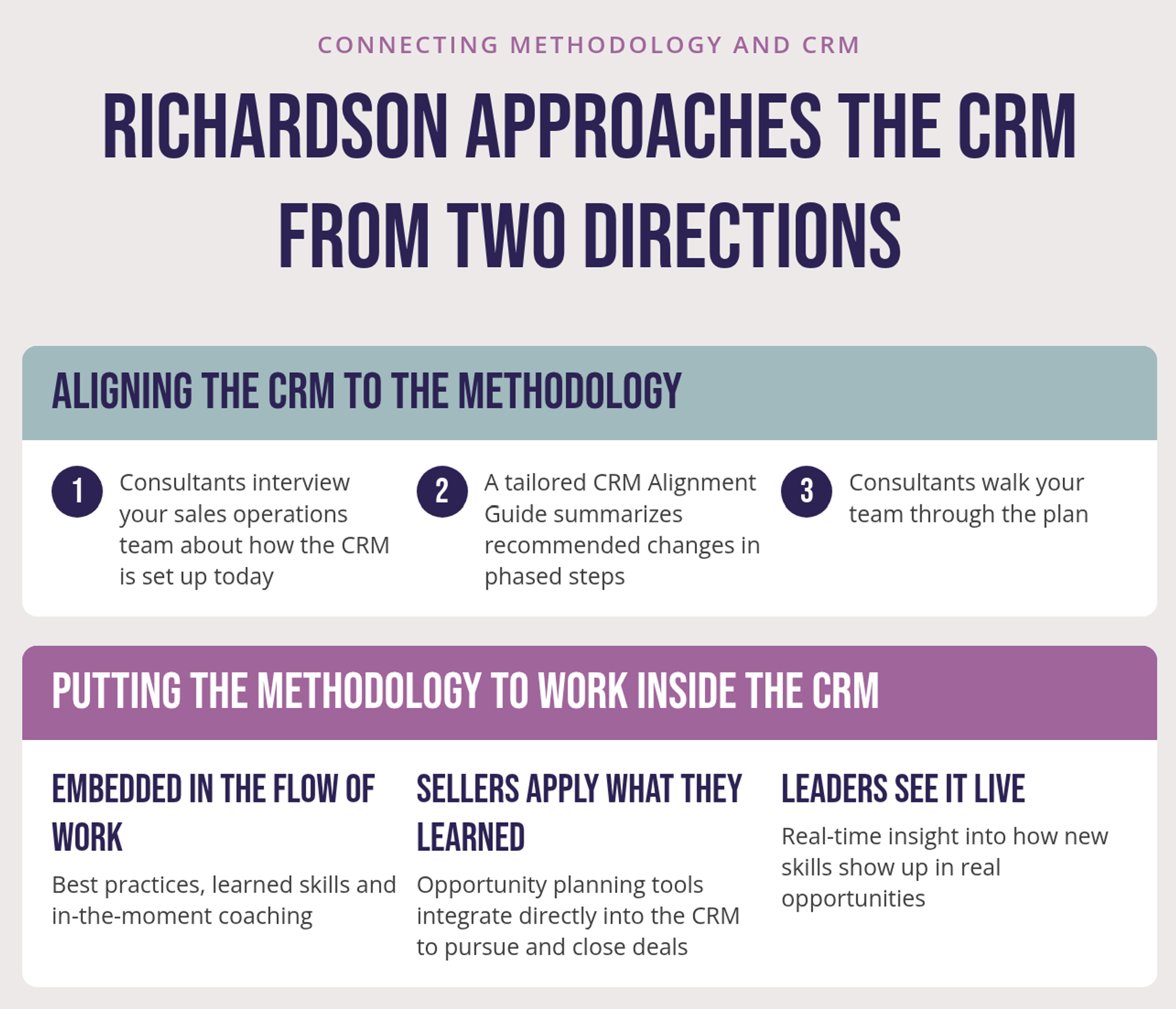
Richardson approaches CRM integration from two directions: aligning the CRM to the methodology, and putting the methodology to work inside the CRM.
Aligning the CRM to the Methodology
Richardson's CRM Optimization consulting aligns your sales process and methodology with your CRM application. Consultants interview members of your sales operations team to understand how the CRM is set up today, develop a tailored CRM Alignment Guide that summarizes recommended changes with phased implementation steps, and walk your team through the plan.
Putting the Methodology to Work Inside the CRM
Richardson's CRM-enabled Workflow Tools embed best practices, learned skills, and in-the-moment coaching into sellers' natural flow of work. The opportunity planning tools integrate directly into the CRM, so sellers can apply what they've learned to pursue and close deals, and sales leaders get real-time insight into how new skills show up in real opportunities.
What Else Has to Be in Place Beyond the CRM?
The CRM carries the methodology into daily work, but it is one of three areas a solid integration plan addresses: technology, resources, and people. Focusing on these three gives leaders a manageable set of objectives when implementing a new methodology.
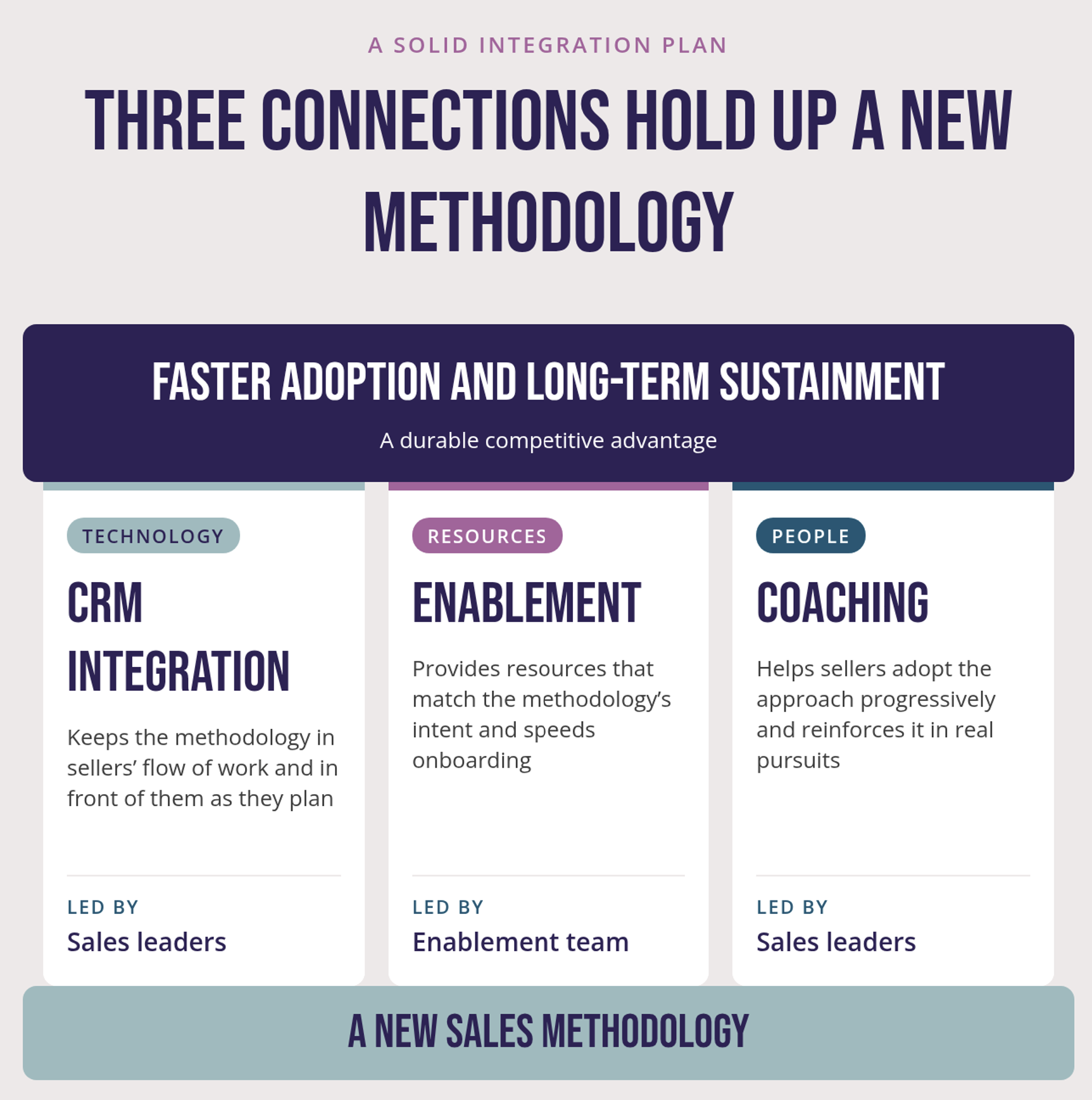
| Connection | What it does | Who leads |
|---|---|---|
| CRM integration | Keeps the methodology in sellers' flow of work and in front of them as they plan | Sales leaders |
| Enablement | Provides resources that match the methodology's intent and speeds onboarding | Enablement team |
| Coaching | Helps sellers adopt the approach progressively and reinforces it in real pursuits | Sales leaders |
Enablement Resources That Match the Methodology's Intent
The enablement team must be part of the change process from the beginning. The better enablement professionals understand the true intent of the methodology, the better prepared they are to help sellers turn concepts into actions.
Being close to the methodology also lets enablement professionals onboard new team members quickly. Turnover is high in sales. The Bridge Group's 2025 research found median turnover of 40% among sales development teams. The faster new sellers get up to speed, the better the team performs and the shorter time to productivity becomes.
Training is also an ongoing process. Some aspects of the methodology will need to change, particularly in the early stages, when refinement customizes the approach to the product or service being sold. Enablement professionals are the crucial intermediary between the methodology and the sellers.
Coaching That Keeps the Methodology Working in Real Pursuits
A new sales methodology intimidates sellers because it departs from what is comfortable. Sales leaders who coach make it possible for sellers to adopt the approach progressively and to iterate on the concepts they learn.
Coaches are also critical for reinforcement. In regular reviews, they see whether the new approach is being applied and how consistently. At the macro level, leaders can review pipelines and individual opportunities through the lens of the new methodology and prioritize the pursuits that fit it best. When sales leaders bring the methodology into coaching conversations, sellers see that leadership has a personal stake in its success.
Make the Connection Lasting
Connecting a sales methodology to your systems and processes can be complicated, but it doesn't need to be. By focusing on CRM integration, enablement, and coaching, sales leaders can make the change impactful and lasting. The result is faster adoption of the methodology and a greater likelihood of long-term sustainment, which creates a durable competitive advantage.