How Can Sales Training Help Healthcare Companies Differentiate?
Sales performance improvement

Written by: Ben Taylor, MBA, Content Marketing Manager, Richardson
Published: November 9, 2026
Bausch + Lomb, a leading global eye health organisation, implemented sales training from Richardson Sales Performance to build trusted advisor relationships, grow market share, and enhance differentiation.
Key Takeaways
- Differentiation in healthcare selling comes from how sellers use product data, not from the data alone.
- A consultative approach helps sellers connect facts and figures to customers' real needs.
- Positioning insights helps sellers become thought leaders in the eyes of customers.
Why doesn't strong product data differentiate on its own?
In recent years, Bausch + Lomb came to realise that its selling model was outdated. Sellers no longer had the tools to succeed, and differentiation remained a problem. The company felt continued pressure to set itself apart from others in its space.
With that goal in mind, Bausch + Lomb prepared to launch several new products. First, though, it would need to redesign its selling framework to better communicate the value of those new offers. The company had volumes of impressive statistics and data to share. Sellers needed new skills to connect the facts and figures to the real-world needs of customers across several markets.
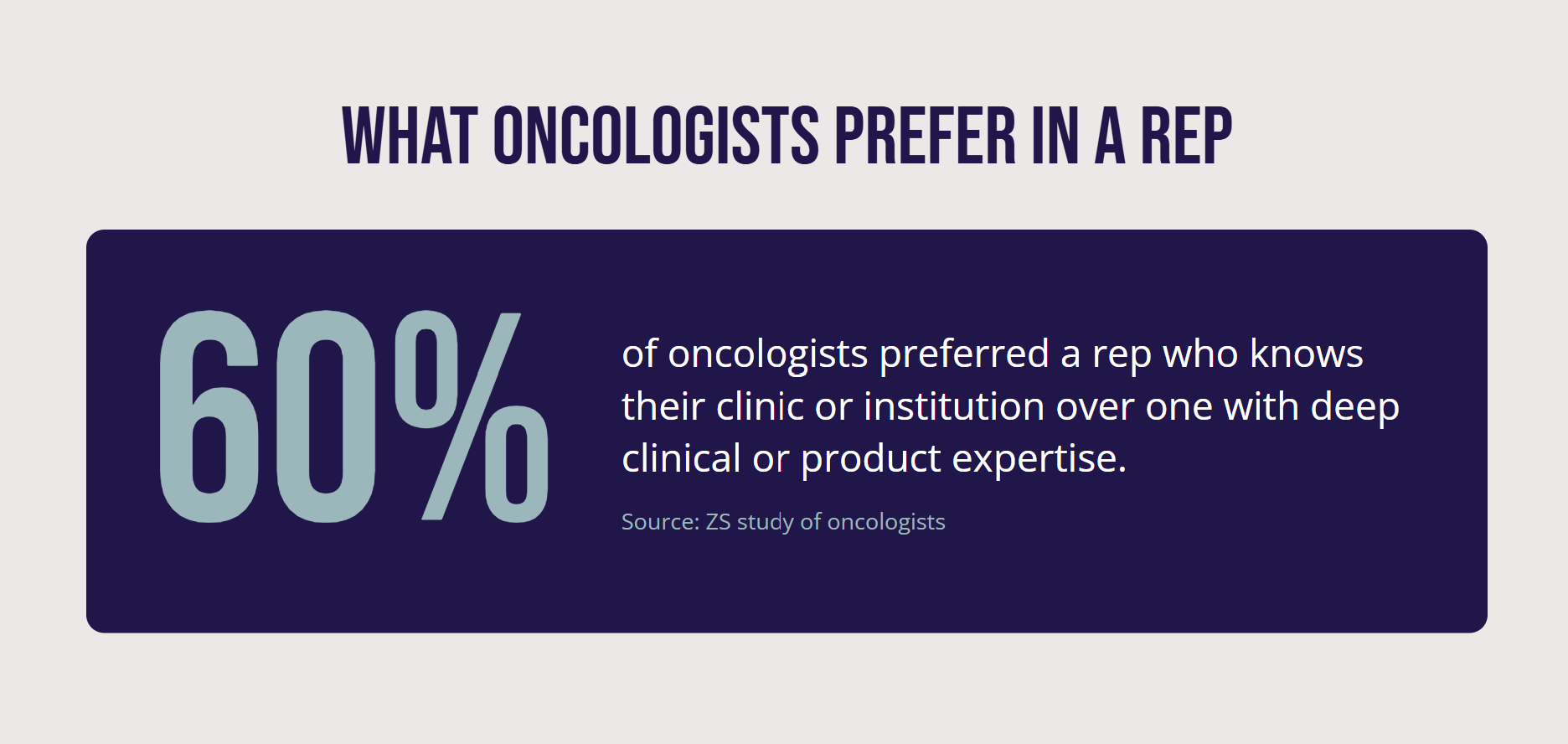
Other healthcare research points the same way. A ZS study of oncologists found that 60% preferred a rep who knows their clinic or institution over one with deep clinical or product expertise.
What does a consultative approach change?
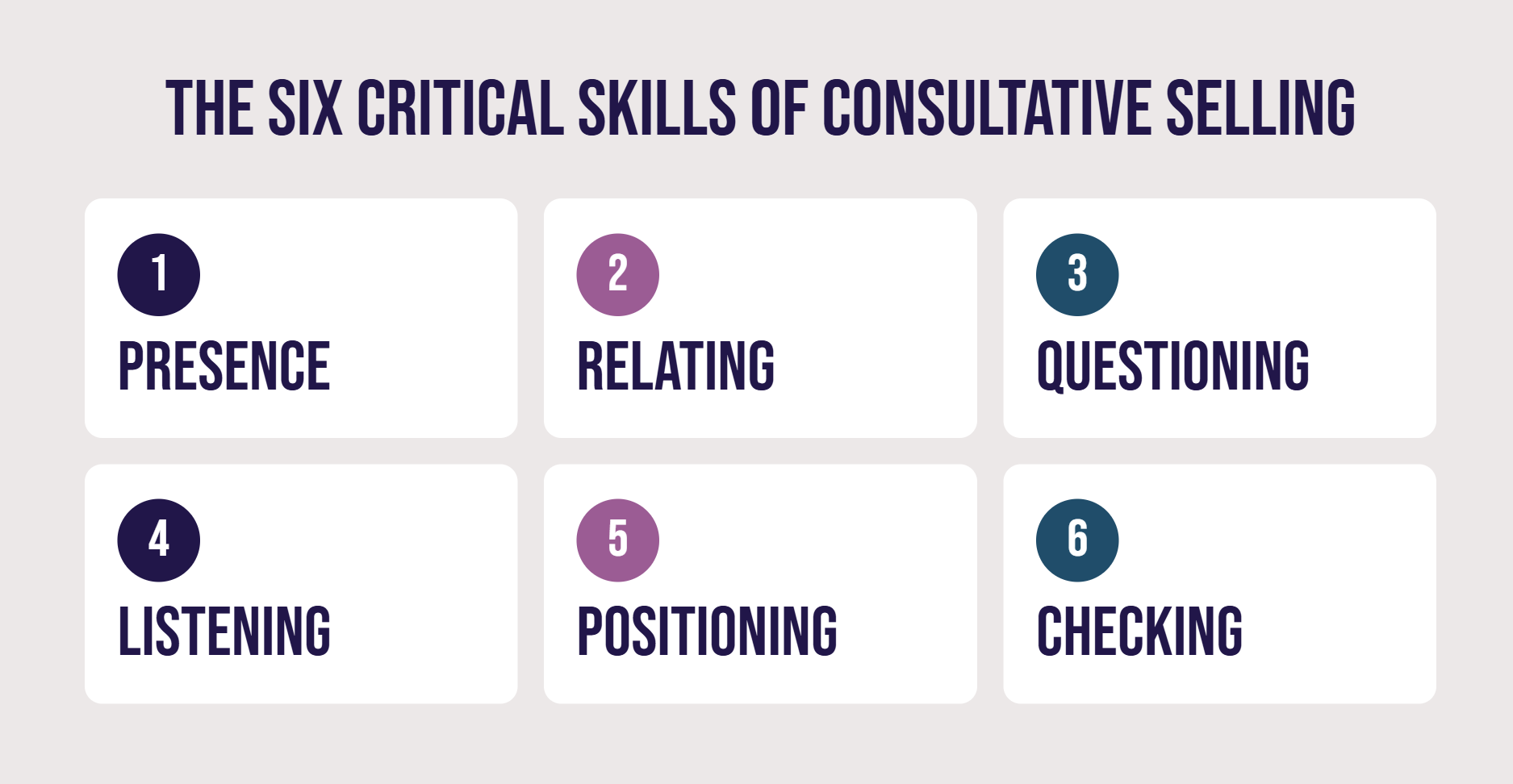
A consultative approach seeks to understand the detail behind customer needs to win the sale. Sellers and managers both learned how to use the Six Critical Skills of that approach: Presence, Relating, Questioning, Listening, Positioning, and Checking.
The same skills helped Bausch + Lomb pursue its goal of differentiation. Teams learned how to position insights so they become thought leaders in the eyes of customers.
How do you change a selling culture across a company?
Bausch + Lomb chose a broad-based approach that engaged groups across the company, from sellers to managers to marketing.
- Start with a baseline. Before training began, the company took a "thumb-print" of its sellers' existing capabilities using Richardson's sales competency and skill assessment tools. The baseline gave Bausch + Lomb a starting point for measurement. It also signaled to sellers that the company was resolute in its drive for improved performance.
- Train sellers. Sellers took the Building Trusted Advisor Relationships programme over two days.
- Coach through managers. Managers took the Developmental Sales Coaching programme over one day. Hollister, a medical products company, describes what that kind of coaching makes possible (pull quote below).
"We're able to coach specifically to, hey, how are reps doing with understanding needs? How are reps doing with connection? How are reps doing with recommending our products?" — Darnetta Daire, Sales Enablement Manager, Hollister
With so many people involved, Bausch + Lomb gained complete organisational buy-in from the top down.
What results did Bausch + Lomb see?
| Measure | Result |
|---|---|
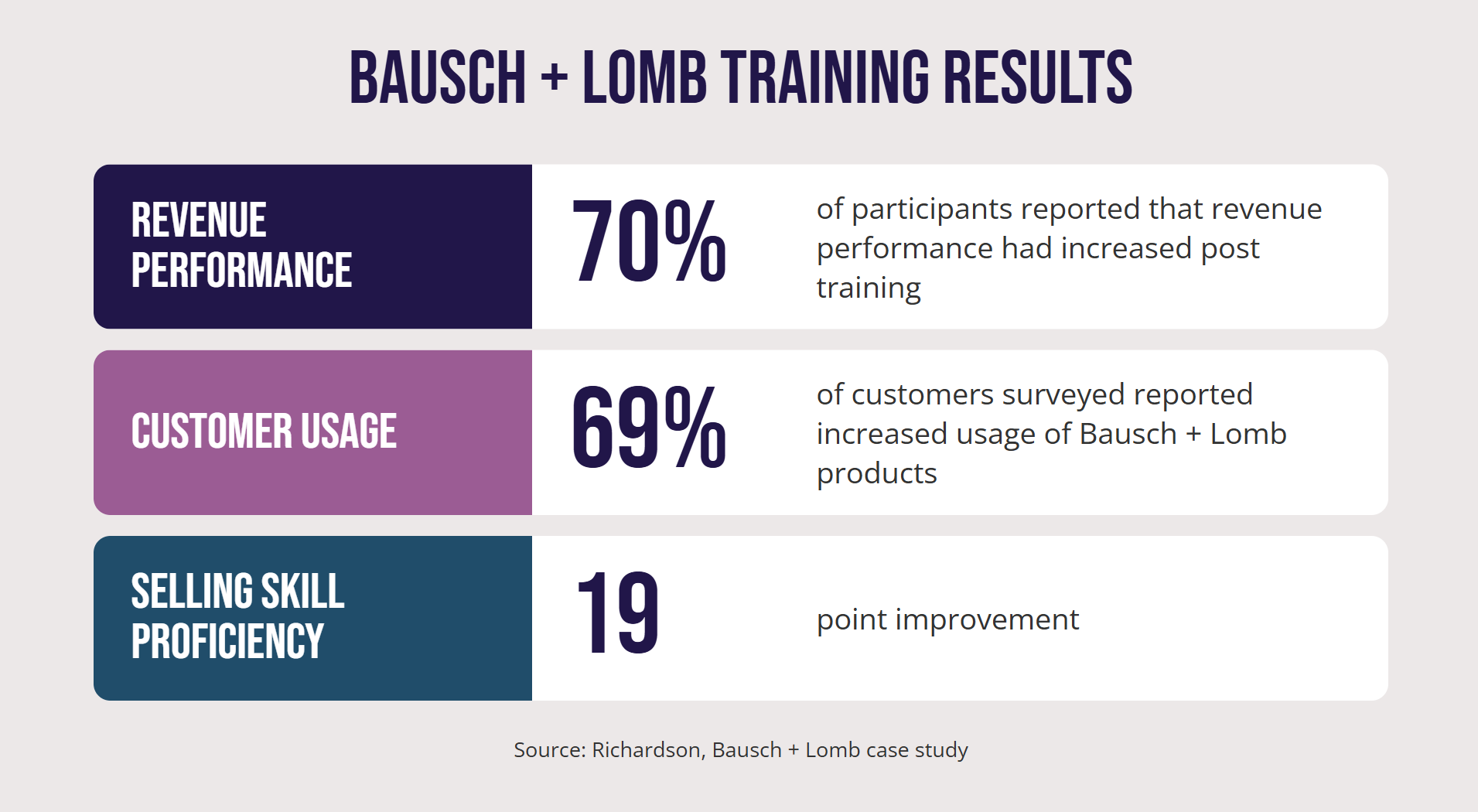
| Revenue performance | 70% of participants reported that revenue performance had increased post training |
| Customer usage | 69% of customers surveyed reported increased usage of Bausch + Lomb products |
| Selling skill proficiency | 19-point improvement |