Selling to Existing Customers When Buyer Uncertainty Rises
Sales performance improvement

Written by: Claire Imber, Director of Content Strategy & Thought Leadership
Published: November 24, 2026
“The future isn’t what it used to be,” wrote essayist Paul Valéry. This idea rings true for most business decision makers as uncertainty rises.
The Federal Reserve Bank of Atlanta’s monthly Survey of Business Uncertainty, which goes to about 1,500 senior finance and management leaders at US firms, continues to find that firms are “more uncertain about future revenue growth than they were before the pandemic.” The events of recent years — higher interest rates, inflation fluctuations, slowing global economic growth, and supply chain challenges — have left executives less confident in their ability to read the road.
This uncertainty has started to exhaust stakeholders involved in buying decisions. Many are at their peak tolerance for risk. As a result, sellers are seeing more hesitation among buyers who are in “wait-and-see” mode. Richardson’s 2025 Selling Challenges Research Study, which surveyed about 500 B2B sellers, found that 48% named buyer indecision as the top challenge in winning active opportunities. Sellers, however, can’t wait. They need a path forward.
Key Takeaways
- Existing customers are the fastest path forward when buyers hesitate, because trust and context are already in place.
- That head start helps sellers get to core needs faster, access power more efficiently, and build consensus sooner.
- It isn’t a shortcut. Sellers still need to confirm what has changed in each account.
Why should sellers focus on existing customers when buyers hesitate?
For most sellers, the path forward leads directly to existing customers with whom they have established trust. The seller already understands many of those customers’ challenges, and the stakeholders’ decision-making processes are clear.
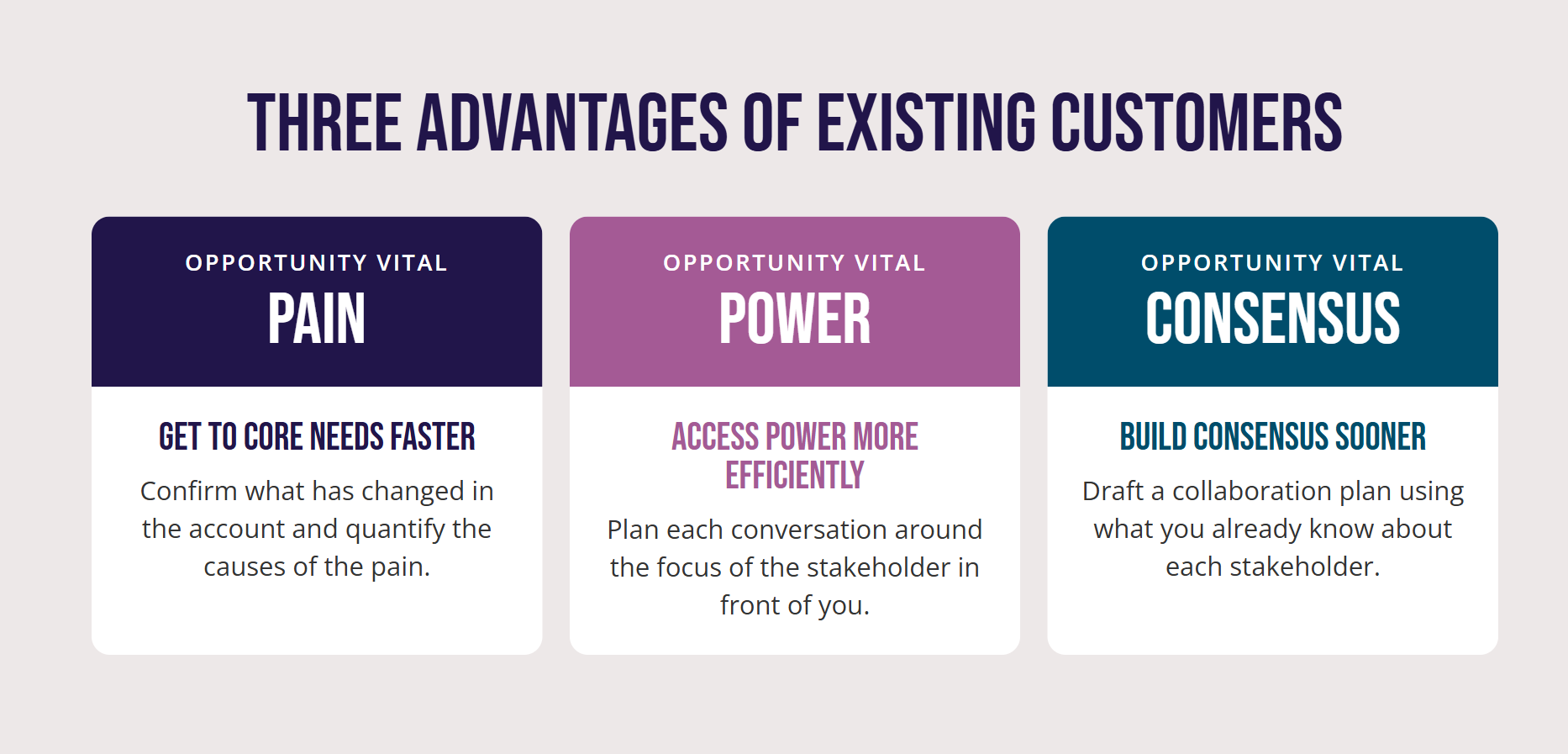
In these uncertain times, sellers benefit from three advantages when they focus on existing customers. They can:
- Get to the customer’s core needs faster
- Access power more efficiently
- Build consensus sooner
These map to three of the five Opportunity Vitals: Pain, Power, and Consensus.
How can sellers get to an existing customer’s core needs faster?
Sellers need to avoid the trap of assuming they already understand an existing customer’s needs. While the seller has a head start in their pain discovery process, they still need to ensure they have the most up-to-date understanding of the causes of the customer’s pain and how those causes connect to the stakeholders’ latest goals.
One of the first steps in diagnosing the customer’s pain is to get the pain admitted and quantified. Sellers have already completed some of this work with existing customers. They already know many of the customer’s objectives, challenges, and personal agendas, and how those link to broader business goals and initiatives. This foundational information allows the seller to move faster toward the next step: diagnosing and quantifying the causes of the customer’s pain.
The seller must then explore what developments have caused the pain. Many of these causes are new and require questioning. Sellers should ask how much pain the challenges are causing, how often they are felt, and how many areas of the business they affect. These questions are critical because they tell the seller which differentiators of their solution are most relevant to the customer.
These questions also lead naturally to others that reveal who else in the business is experiencing these pains, and to what extent. The answers reveal other stakeholders in the sale.
Customers value partners who already understand their business. Emerson’s Stacy Keeling put it this way:
“We chose to partner with Richardson because they take the time to understand our business, navigate the complexities of a global organization, and consistently deliver best-in-class support.” — Stacy Keeling, Director, Commercial Excellence and Lifecycle Services, Emerson
How can sellers access power more efficiently?
Accessing power means understanding the customer’s decision-making process and structure, gaining access, and aligning with people who have influence and buying authority. A seller working with an existing customer will have a general sense of this structure.
Knowing the decision-making process means the seller can plan conversations more efficiently. They know when they’re talking to a stakeholder who is focused on the solution’s financial aspects, and when they’re talking to one who is focused on its transitional or operational aspects. This foresight allows the seller to speak to the focus most relevant to the stakeholder in front of them.
Even with a known stakeholder group and structure, the seller must remember to make their sponsor the hero. The sponsor is still the primary connection between the seller and the rest of the stakeholder group, and without their support and inclusion, the sale cannot move forward.
The seller must also be sure they understand which stakeholder has the greatest influence over the buying decision. This person is not always whoever had the primary buying authority in the previous sale. While the seller needs to find and connect with this person, they can rely on their existing relationships in the company to make an introduction.
How can sellers build consensus sooner?
Building consensus requires uniting many stakeholders with different perceptions of value around a single solution. Focusing on existing customers allows sellers to reach this point sooner because they already know the stakeholders’ perceptions.
A significant step in building consensus is drafting a collaboration plan that outlines the steps the seller and the customer will take to fully evaluate the solution, so that the stakeholders can become comfortable making a buying decision.
Developing such a plan is time-consuming, but when working with an existing customer, the seller can move fast. They already know the events that should appear in the plan. The seller knows what the decision makers need to see to become confident in their choice to buy. As a result, the collaboration plan becomes more accurate and concise.
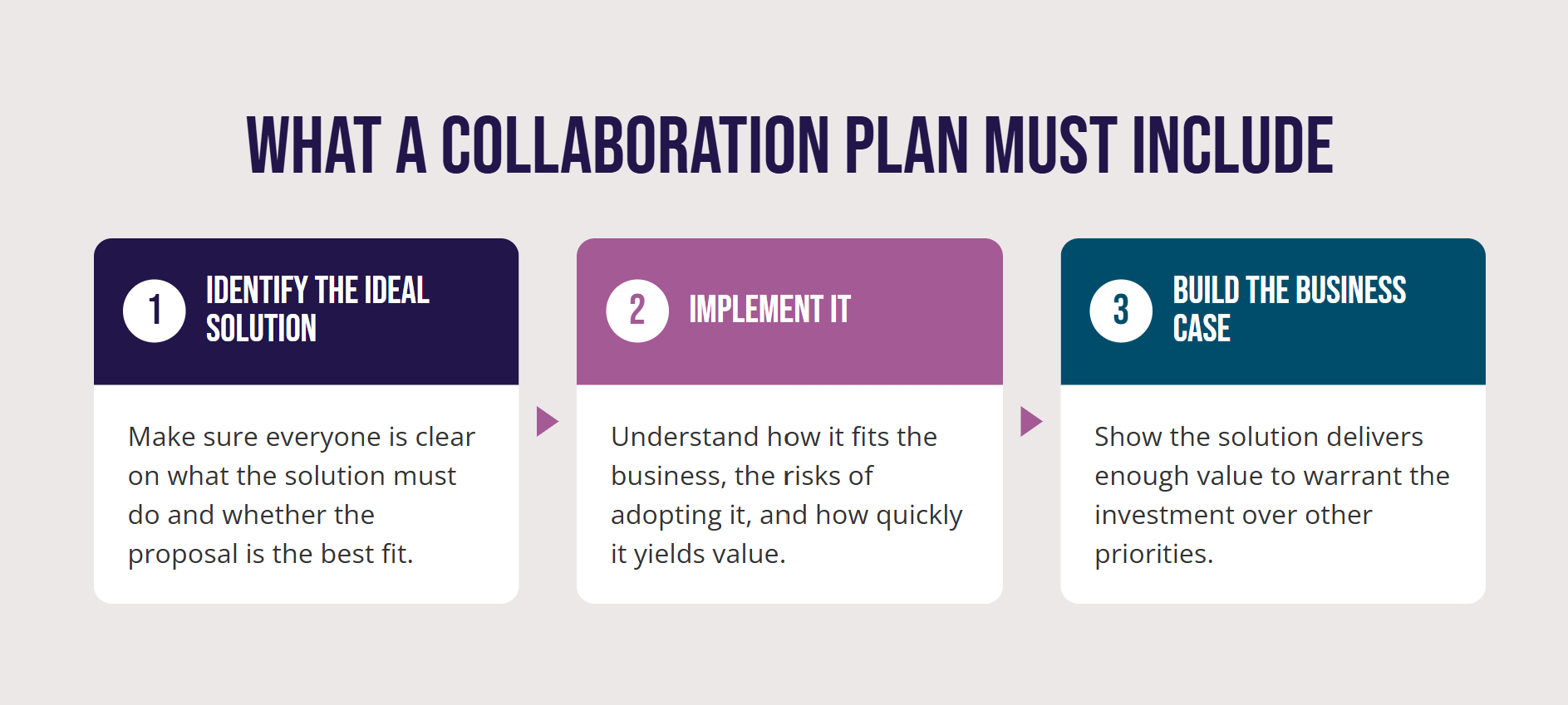
Even with an existing customer, the collaboration plan must include steps to:
- Identify the ideal solution. This ensures everyone is clear on what’s required of the solution and whether the proposed product or service is the best fit.
- Implement it. This means understanding how the solution will fit into the business, the risks involved in adopting it, and knowing that it will yield value relatively quickly.
- Build the business case. This means demonstrating that the solution provides enough value to warrant the investment over other priorities.
An effective collaboration plan addresses all of the stakeholders’ concerns as efficiently as possible, because time kills deals.
Where should sellers focus while buyers wait?
Now is the time for sellers to use the advantages of working with existing accounts in which they’ve built trusted relationships.