How Can Banks Compete with Embedded Finance and Nonbank Lenders?
Sales performance improvement

Written by: Ben Taylor, MBA, Content Marketing Manager, Richardson
Published: November 9, 2026
The rise of embedded finance and the strength of nonbank alternatives present challenges for retail and commercial banking sales professionals. Adapting to this setting means developing a modern set of selling skills. To compete with the ease and personalisation of embedded finance options, sellers must take a more emotionally intelligent approach to customer conversations and seek opportunities to add value. Reclaiming business lost to nonbank options will require understanding and addressing customers' unmet needs.
Key Takeaways
- Banks compete by pairing the speed customers like in embedded and nonbank options with the personalisation those options can't offer.
- That personalisation comes from sellers who build rapport, listen with purpose, and draw out the customer's broader needs.
- Customers come to banks with a specific problem. Sellers who solve it and then explore the wider context find the needs that nonbank options have been serving.
Why Are Embedded Finance and Nonbank Lenders Gaining Ground?
Embedded finance puts a new channel between the bank and the customer
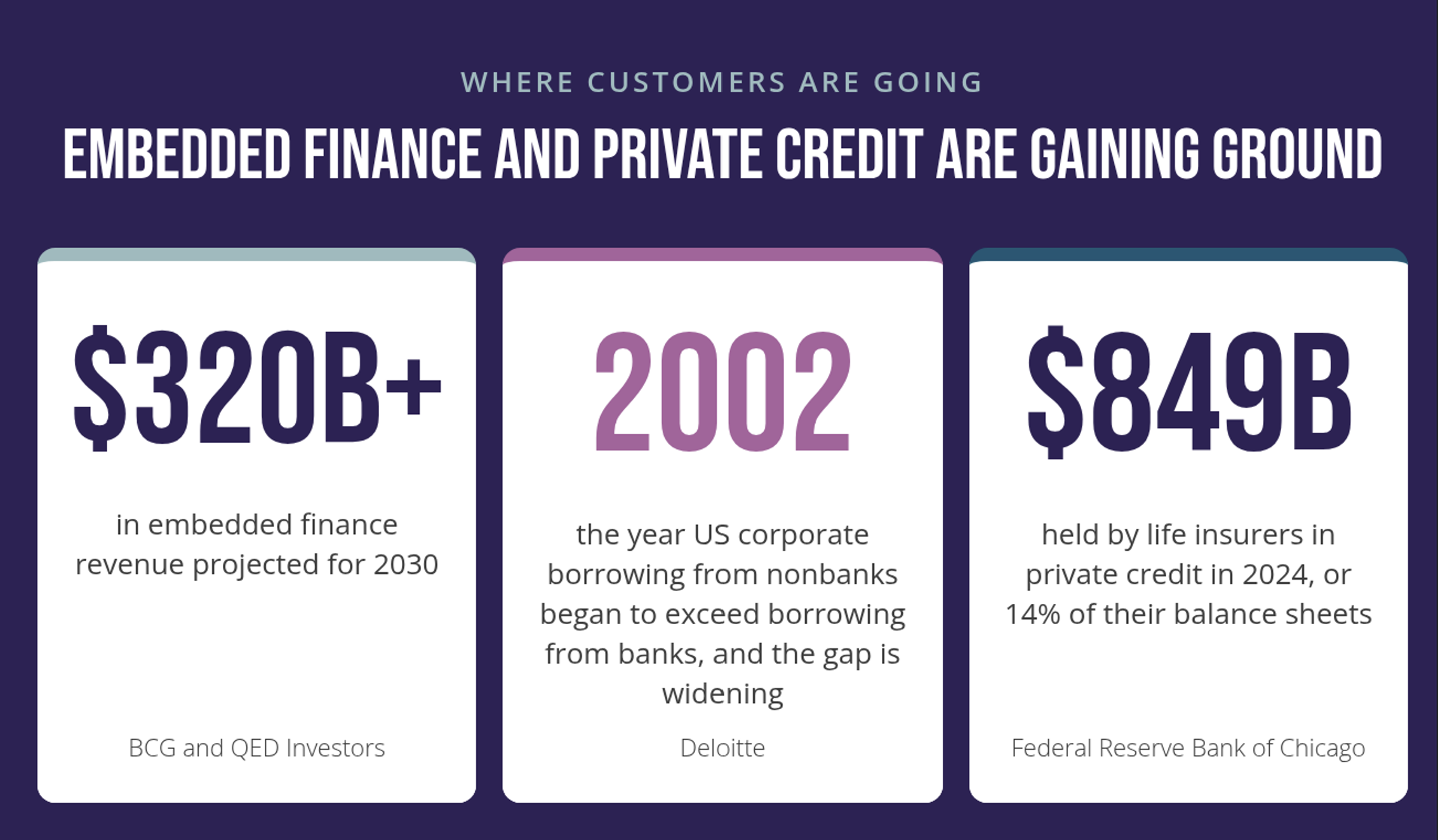
Embedded finance, which makes financial services available on nonfinancial apps and sites, is growing. This frictionless technology places the distribution channel — the app or site — between the bank and the customer. This arrangement makes it difficult for sellers in finance to grow their business because embedded options disrupt relationships with customers. BCG and QED Investors project that embedded finance will generate more than $320 billion in revenue in 2030. Customers want the benefits of quick, convenient options but also expect the personalisation needed to address their unique goals. Banks face pressure to offer both.
Private credit is filling the gap left by cautious lending
In 2023, as banks pulled back from some lending, in part because of market volatility, private credit lenders stepped in with steady funding and efficient processes. Today, private credit continues to grow as borrowers seek finance options that are efficient, customised, and flexible.
This trend is not new — in the US, corporate borrowing from nonbanks has exceeded borrowing from banks since 2002 — however, the gap is widening. The average private credit loan is much larger than the average bank loan. Life insurers are also putting more of their assets into private credit — $849 billion, or 14% of their balance sheets, in 2024.
Now is the time for banks to refocus on exploring and serving customer needs.
How Can Sellers Compete with Embedded Finance Options?
Develop a more structured approach to customer interactions. The time with the customer is brief. Sales professionals need a way to connect with the customer, address the issue, and identify additional customer needs. A structured approach enables them to do all of this by focusing their effort where it is needed most. Structure also ensures a consistent customer service experience across all conversations.
Develop an emotionally intelligent response
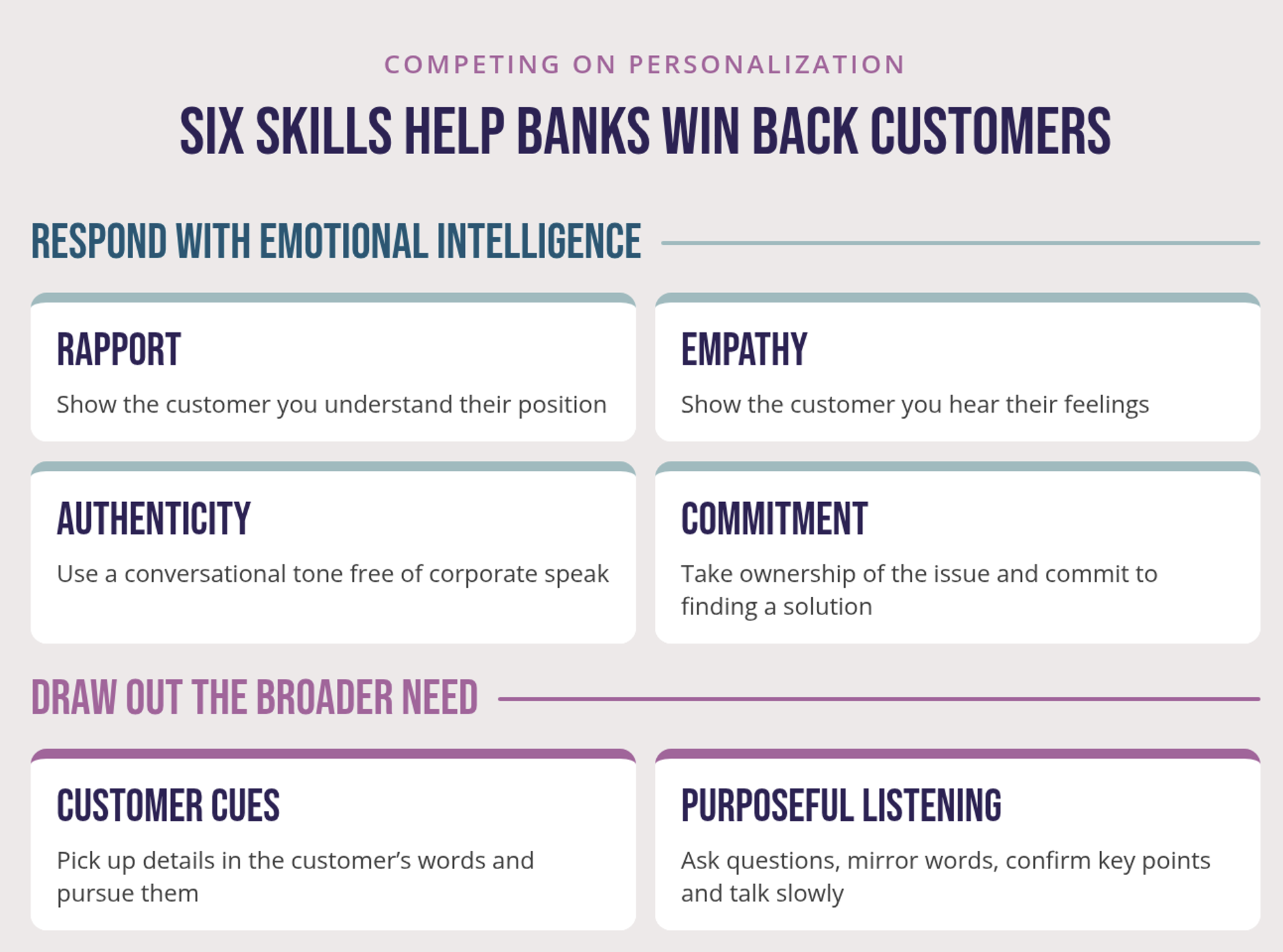
The first step is to demonstrate rapport, empathy, and authenticity:
- Rapport means showing the customer you understand their position.
- Empathy means showing the customer you hear their feelings.
- Authenticity means using a conversational tone free of corporate speak.
Make a commitment to helping the customer
The customer needs to know that they have an ally. Sales professionals in banking become that person when they take ownership of the customer's issue and commit to finding a solution. This level of commitment will immediately stand out to customers who have bounced from one service professional to another.
Pay attention to customer cues
A customer's additional, unexplored need rarely arrives as one complete picture. It comes out in pieces, as cues from the customer. A cue is any detail found in the customer's words. Attentive sales professionals pick up on these cues and pursue them. For example, a customer might remark that a separate department within their organisation has an emerging problem. Or they might note that the issue is a symptom of a deeper problem. This information is crucial to positioning additional products and services later.
How Can Banks Win Back Business Lost to Nonbank Lenders?
Equip service professionals to serve the customer's unmet needs. Banking service professionals represent an opportunity to address those needs. In this setting, the sale is more authentic because it begins with a call from the customer to the service professional rather than the reverse.
Resolving the customer's issue often requires positioning an expanded offering. Doing so means avoiding the common mistake of rushing to address needs before they're fully understood. An urge to help leads sellers to prescribe quick solutions, which circumvents the kind of dialogue that encourages the customer to volunteer important details. The beginning of the conversation is the service professional's best opportunity to learn about the customer.
Listen with purpose
Listening with purpose means doing more than just hearing the customer. It means understanding them. To do so, the service professional must:
- Ask questions
- Mirror the customer's words
- Confirm key points
- Talk slowly, which compels the customer to do the same
Nobody is born with listening skills. Sellers develop them. Listening is one of Richardson's Six Critical Skills.
Encourage the customer to go wide and deep
In most cases, the customer is focused on a specific, narrow problem. The service professional's job is to address that initial problem and prompt the customer to go further to reveal the broader context surrounding the issue. This wider context is where the customer's additional needs live.