How to Build a Strategy for Pursuing a Complex B2B Sales Opportunity
Sales performance improvement

Written by: Claire Imber, Director of Content Strategy & Thought Leadership
Published: November 11, 2026
Selling is difficult because buying is difficult. The buyer faces competing priorities and changing needs. These factors and others have made the buying process more complex than ever. Therefore, sales professionals need a new methodology for closing the sale. They need to be thinkers and doers, but they need to think before they do. They need a working plan that evolves with every conversation.
Those plans must engage the customer in the customer's world because the customer has the home turf advantage. They must consider the customer's perspective in a way that goes deeper than meeting surface-level needs. Sales professionals today need the strategy and skills that keep them in front of the customer.
Key Takeaways
- Pursue each opportunity in short, repeating selling sprints: Prepare – Engage – Advance.
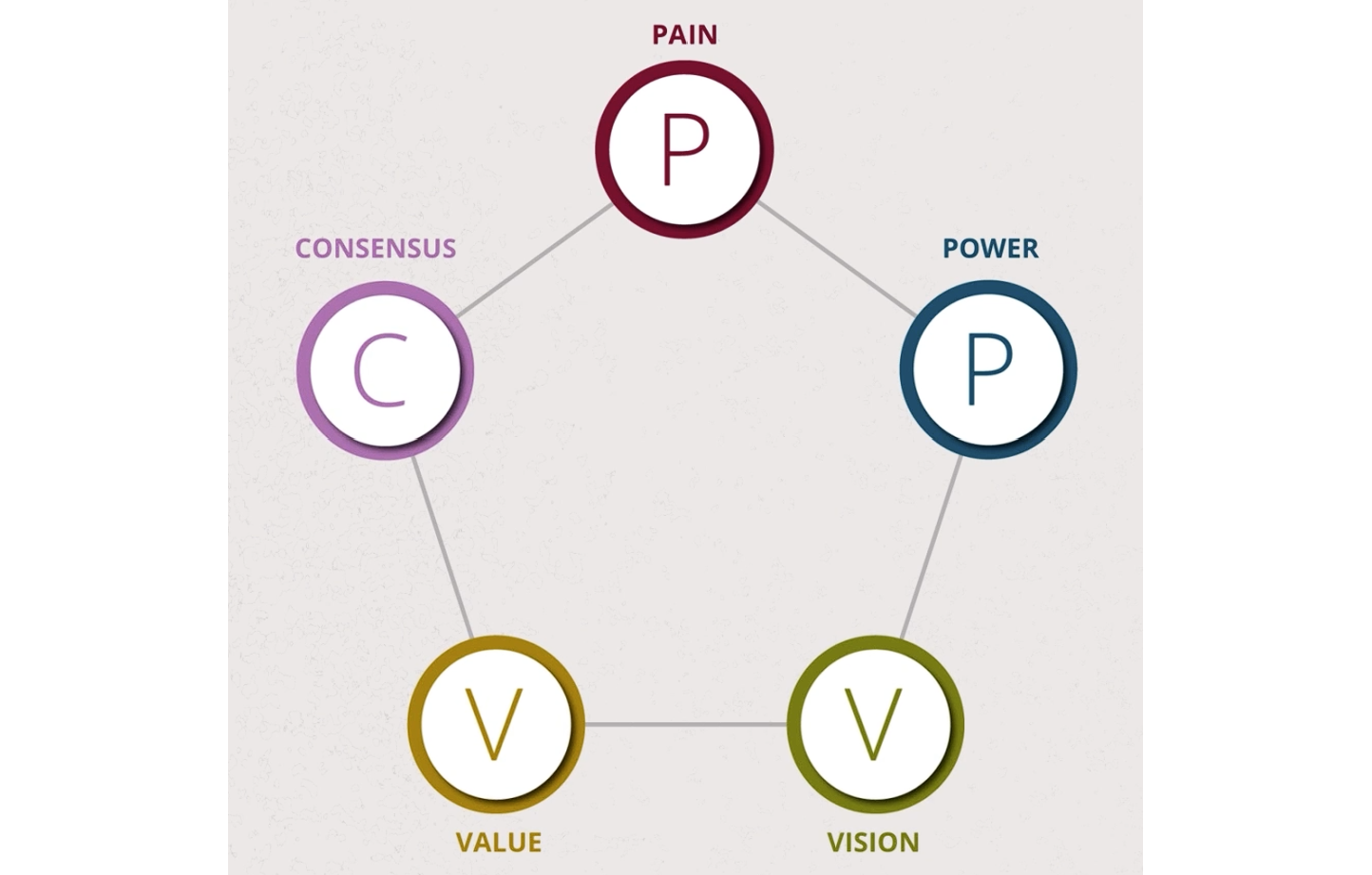
- Use the five Opportunity Vitals — Pain, Power, Vision, Value, and Consensus — to judge deal health with facts, not assumptions.
- Anchor the plan in the buyer's changing world, because the customer has the home turf advantage.
What Is the Consultative Opportunity Pursuit Methodology?
This methodology gives sellers a repeatable way to manage a deal from the first conversation to the close while staying flexible as the buyer changes. Richardson teaches this as Consultative Opportunity Pursuit, which rests on three elements:
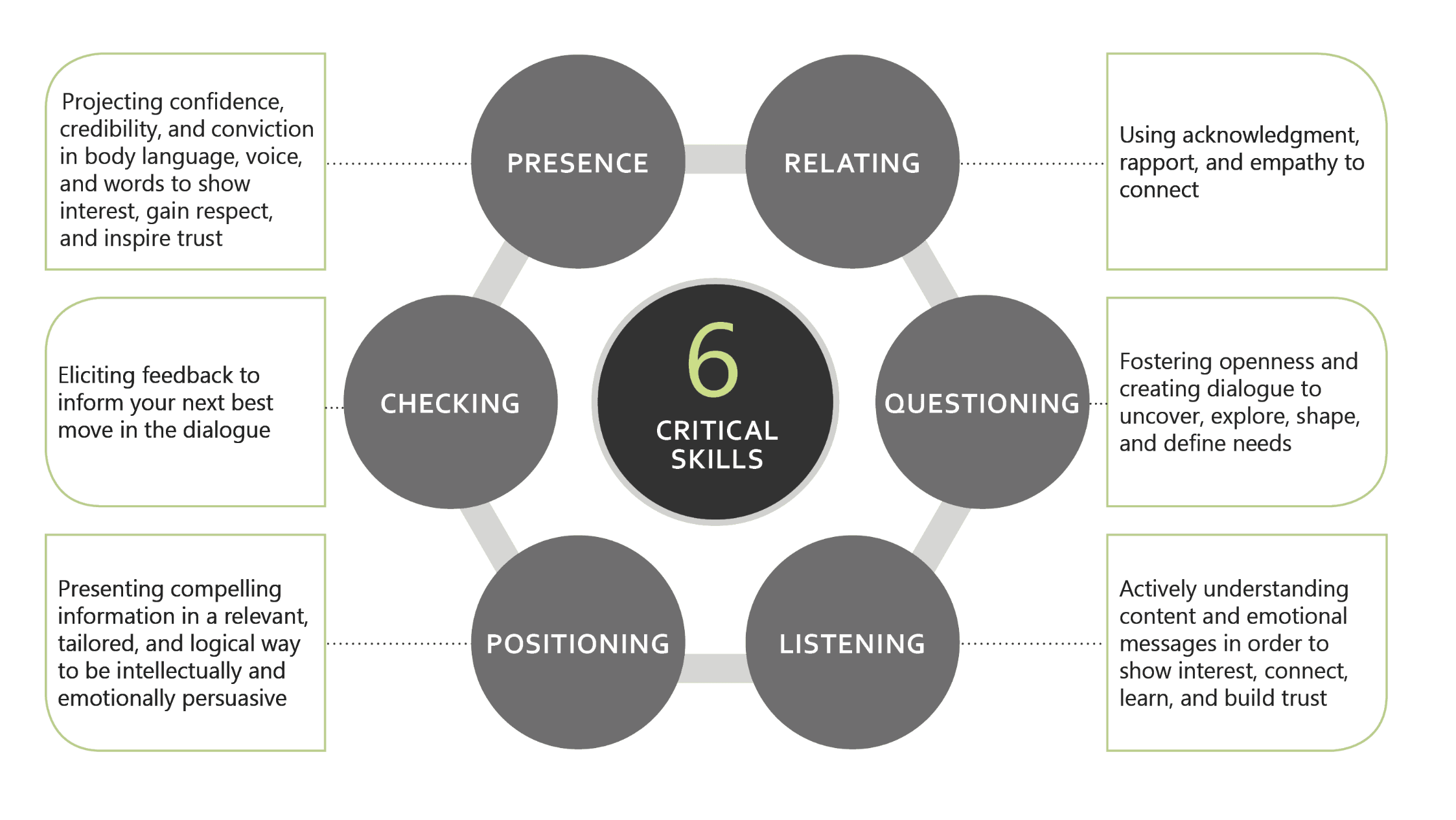
- The Six Critical Skills — Presence, Relating, Questioning, Listening, Positioning, and Checking — which drive buyer-aligned conversations.
- Opportunity Vitals — Pain, Power, Vision, Value, and Consensus — an objective set of criteria for measuring deal progress.
- Selling sprints — short bursts of activity that follow a Prepare – Engage – Advance pattern.
Opportunity Vitals show the seller what to do next. The Six Critical Skills show how to do it well. Selling sprints give the pursuit its rhythm.
How Do Selling Sprints Keep a Pursuit Moving?
A selling sprint is a short burst of activity intended to advance the sale. Because the pattern repeats, sellers keep revisiting the facts and revising their understanding of the customer's situation. That habit heads off surprise late-stage losses.
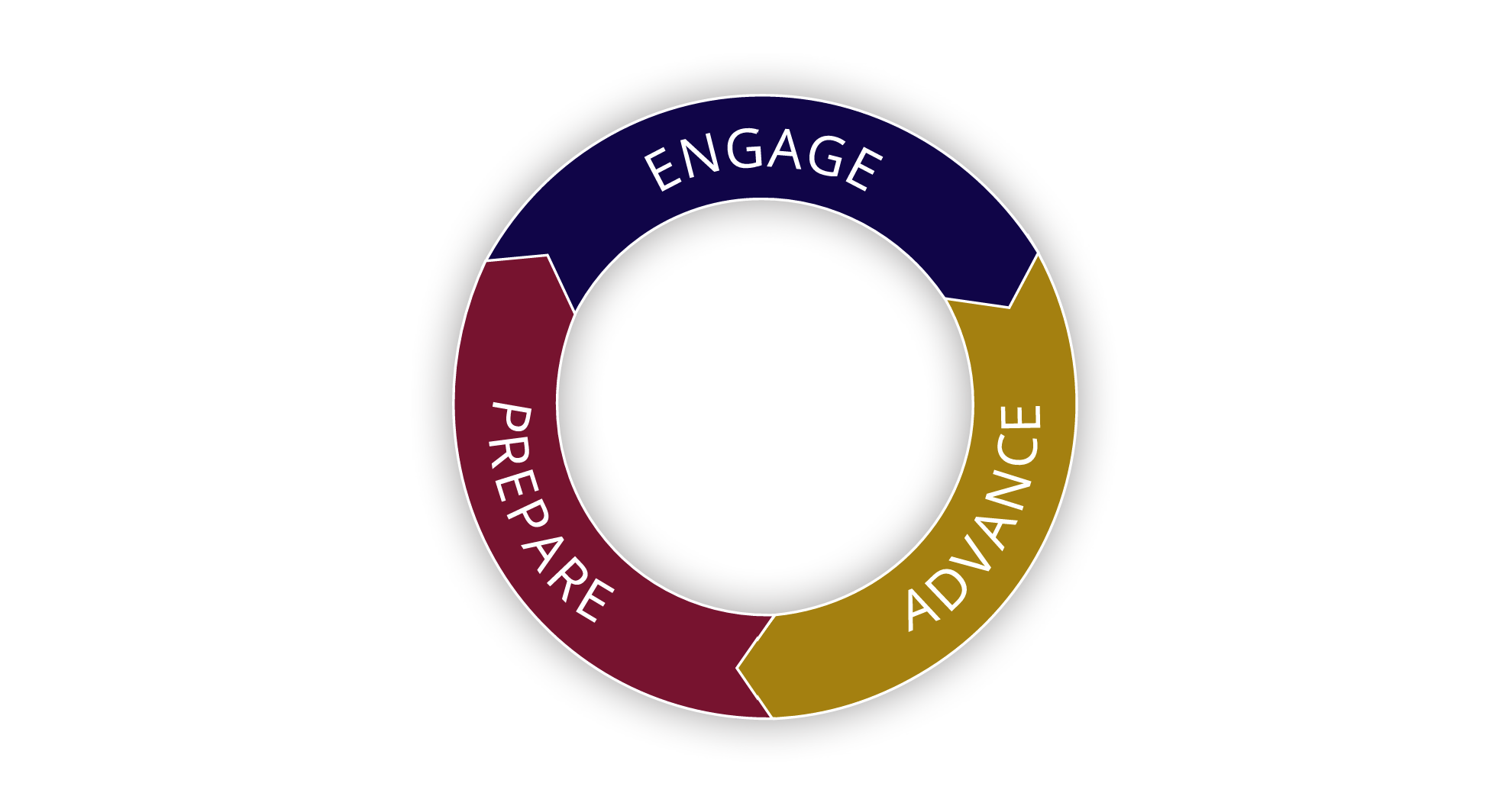
Prepare
Strategy is nothing without execution, and strong execution comes from preparation. Too often, sales professionals reach out to the customer in their enthusiasm and move ahead without preparing — and they risk losing credibility. Preparation means thinking critically about an upcoming conversation. Sellers build clarity in three areas: their customer (the individual stakeholders and how the customer's pain flows through the organization), their value (which aspects of the solution are truly unique, and why they address the pain more powerfully), and their call plan (a game plan that ensures they learn key information in every conversation).
Engage
Engaging starts with an objective read of the opportunity's current health, an understanding of the gaps preventing movement, and a clear goal for the conversation. Sellers do this by measuring their progress against the Opportunity Vitals. To advance the sale, every engagement must add value to the customer. The information gained from even the shortest conversation is often more powerful than any research.
Advance
Advancing covers what happens right after a customer conversation, so momentum doesn't fade. It has three steps:
- Reflection. Review the results of the conversation and the lessons learned, then decide on next steps.
- Follow-up. Debrief with the customer and seek additional insights from stakeholders to build a more complete picture of their needs.
- Follow-through. Meet customer commitments and complete the internal actions the sale requires, including updating teammates on the latest understanding of the customer's pain.
What sellers learn in Advance feeds directly into the next sprint, so each cycle starts from better information than the last.
What Are the Opportunity Vitals, and How Do They Qualify a Deal?
Opportunity Vitals are an objective set of criteria for measuring deal progress and directing the seller toward the next best move. They anchor selling to facts rather than assumptions, which keeps sellers focused on the activities that lead to a win.
| Opportunity Vital | What it measures | Goal in each sprint |
|---|---|---|
| Pain | The customer's critical business issue or missed opportunity. A pain is personal, quantifiable, and negatively stated. | Understand the customer's current state, diagnose the pain, and align capabilities to its causes. |
| Power | The person or group who will make the final buying decision. | Identify who is affected and how the decision gets made, then gain access to those with power and build their confidence. |
| Vision | How the customer sees themselves using the solution's capabilities. | Align on a shared vision, uncover the capabilities required, and quantify the impact of meeting those needs. |
| Value | The measurable business factors the solution will improve. | Recap and headline the value in terms that fit the customer's specific needs. |
| Consensus | Agreement across the buying committee that the solution delivers the value they want. | Co-create a plan for implementation with stakeholders and keep decision makers engaged. |
Consensus deserves particular attention. Sellers achieve it when they have addressed each stakeholder's individual needs and the committee agrees that the solution is easy to implement, the risk of not purchasing is significant, and the expected return justifies the cost.
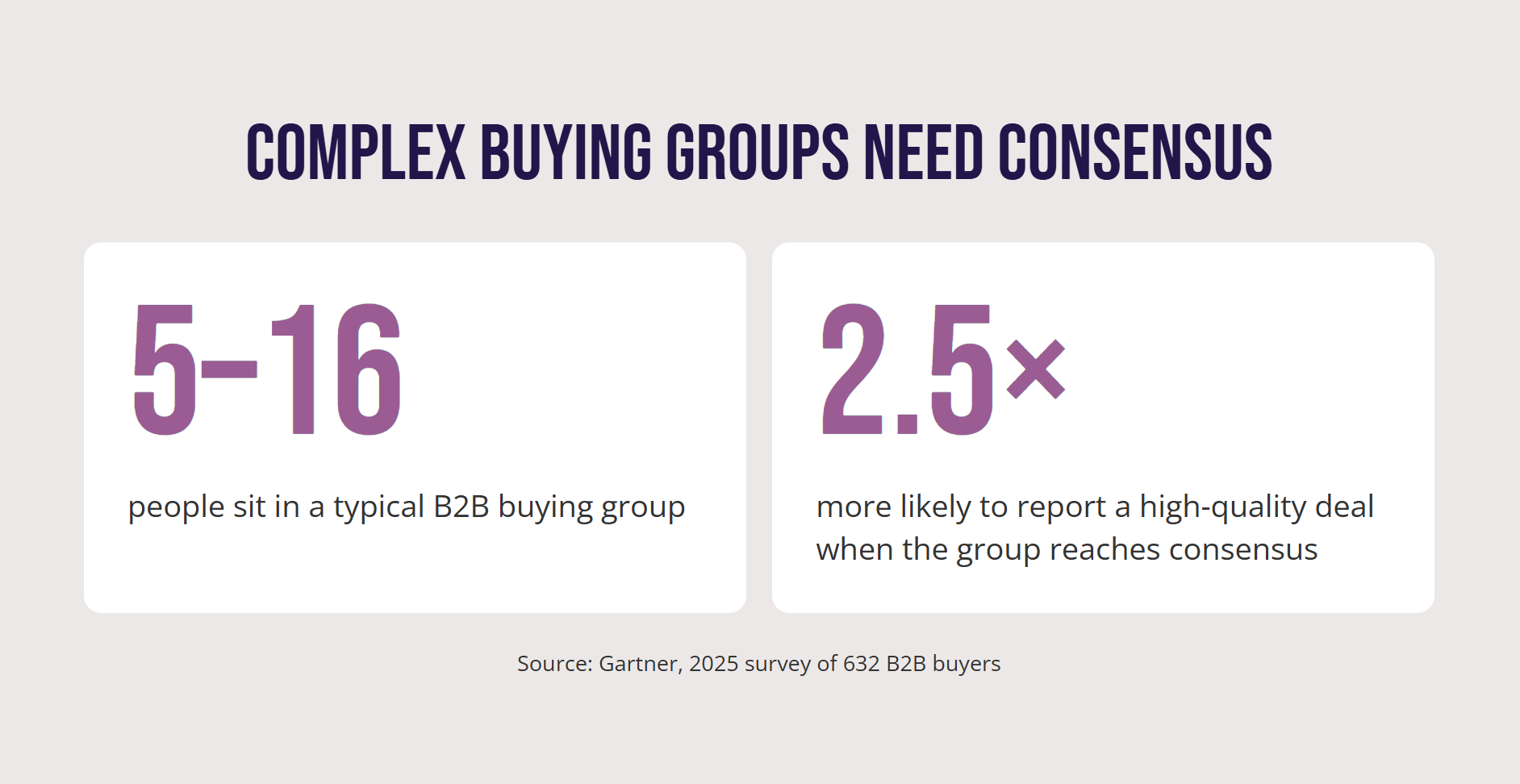
Gartner's 2025 survey of 632 B2B buyers found that buying groups range from five to 16 people, and that groups that reach consensus are 2.5 times more likely to report a high-quality deal. Competing priorities distract customers, and risk-averse behavior compounds as more stakeholders enter the picture, so sellers must take the lead, align decision makers, and realign them as the group changes.
The vitals also keep qualification honest. The customer's needs change throughout the buying process, and the scope of the sale changes with them. Stakeholders enter and exit, and this shifting sphere of influence can cause a deal to drift or die. Because sellers check the vitals in every sprint, they can identify red flags early and reevaluate whether a deal is still real. They need the insight and resolve to let opportunities go when necessary.
Why Does an Effective Pursuit Strategy Start With the Buyer's Perspective?
The buyer has changed because their environment has changed. Committing to and implementing a solution represents an organizational change, and the consequences of a change at this scale rest with the customer. High expectations drive feelings of uncertainty. Customers need more than a map — they need a guide. Gartner's 2026 survey of B2B buyers found that 69% prefer to validate AI-generated insights with sales reps.
Today's customers also do more upfront research. The same survey found that buyers used an average of seven information sources in a recent purchase. Customers enter the decision process armed with information that has already influenced their thinking, so a customer arrives anchored to one or more beliefs before the first conversation with a sales professional. More stakeholders each bring a personal definition of value and an individual way of assessing worth. The net result: sales professionals must reach a higher bar to compel customers to buy.
Partnership outlasts the transaction
Transactions end. Partnerships last. Gallup reports that B2B companies win by building relationships, not by selling on price. The key to building a relationship is focusing on mutually beneficial outcomes. This sense of shared goals must emerge from the sales professional's words and actions from the first conversation through the negotiation.
The buying journey is dynamic
There are few, if any, milestones in the buyer's journey. Movement is not linear. Customers move forward, backward, and sideways as decision makers work toward a consensus and a common definition of success. That is why each sprint starts from the latest facts rather than the original plan.
What buyers are working to accomplish
With a buyer-centric perspective, sales professionals can anticipate how the customer's thinking evolves. Customers continuously refine their thinking around the decision to buy or not buy as they:
- Gain clarity. As companies become more siloed, it gets harder to agree on the nature of the problem and the best solution. The customer's initial definition of value rarely matches their final one.
- Evaluate options. Many customers begin to evaluate options before speaking with a sales professional. Effective sales professionals find a way into the picture before this stage.
- Increase confidence in the economic value of the solution. Procurement specialists and finance also influence opinions, and they require pricing and ROI to fall into specific parameters.
- Increase confidence in the ease of acquisition. Buyers have little time for new projects, so the solution must fit the business rather than the business fitting around the solution. Customers need to see that implementation has proved easy for others.
- Alleviate fears. Even the most vetted solutions require the customer to accept some risk. No matter how much the data supports the decision, the customer faces the possibility that results will falter.
How emotions shape the buying process
Customers appear analytic. With money at stake, they feel obligated to present each decision as one driven by logic and research. In truth, emotions wield equal, if not greater, influence. Emotions are individual and unique to each stakeholder, and they run steady or peak at different stages of the journey. Behavioral research shows that emotions from an unrelated situation can carry over into economic decisions, even when real money is at stake. Two categories matter most:
- Fear of loss. A poor decision has serious implications for the individuals, the team, and the business. In many cases, these emotions are strong enough to overpower the most compelling evidence for a buy decision.
- Motivation for gain. A successful solution offers recognition and financial gain. Just as a fear of loss can deter momentum, the motivation for gain pulls a customer through the buying process.
This is why the Pain vital is personal as well as quantifiable. Problems and opportunities that aren't connected to a deeper personal feeling of pain go unaddressed. Sellers must watch for emotions like fear, which can prevent the sale, and motivate action that combats the status quo without appearing pushy.
How Do You Start the Buyer's Journey?
Triggering the buyer's journey creates an opportunity to sell. It also places the sales professional in the picture early, when they can create the most influence. Two factors trigger the journey, and both are where the Pain vital begins.
A pain point. A customer experiences a pain point when they encounter factors challenging their strategy — a new competitor enters the market, market share diminishes, or economic conditions deteriorate. Customers see the effects of the pain point before they know what it is, so sales professionals can offer value by helping the customer diagnose the problem and participating in the customer's research process.
An opportunity. When an advantage presents itself, customers need to act, but they often need new capabilities to realize its value. Opportunities arise when new markets open, regulations loosen or tighten, or margins become more favorable. Sales professionals who help customers identify opportunities uncover a potential sale and demonstrate their strategic and analytic abilities by showing customers where to find more revenue.
The most effective sales professionals do more than follow the buyer's journey — they create it.
Which Buying Factors Should Your Strategy Account For?
Buying factors are the set of facts, influences, and circumstances that all contribute to the decision to buy or not buy. They are dynamic and interrelated, and they keep evolving as the customer moves through the journey.
| Buying factor | What it means for your plan |
|---|---|
| The case for change | A customer can't confidently buy until they have a strong business case and have assessed value versus risk. Don't assume the customer has already sold themselves internally. Fear of change is ever-present, and the closer the customer gets to the purchase, the more their fear rises. |
| Regret aversion | The customer anticipates regret before experiencing it, and that anticipation may carry as much weight as ROI or price. Decisions are powerfully affected by anticipated regret, and a Psychological Science study found that people overestimate how much regret they will feel after a near miss. |
| Sunk cost fallacy | The old way of doing things represents costs already incurred, which creates an urge to stay the course. Be prepared to help customers overcome this bias. |
| Choice overload | The customer's attention is divided. Limit the number of choices you ask them to make, and simplify your language, written communication, and visuals. |
| Status quo bias | After enough time, everyone becomes comfortable with current conditions. The status quo is one of the most immovable forces working against sales professionals, so prepare to bring every asset and capability to bear. |
| Stakeholder dynamics | Buyers must get their own stakeholders on board. Identify who will champion change, understand the power structure, and learn the differing needs among stakeholders and how to align each person. |
| The decision process | Projects stall because new stakeholders emerge, requirements change, and priorities shift. Effective sales professionals manage this process, knowing that a CFO and a procurement specialist will have strong influence on the decision makers. |
How Do the Pieces Fit Together?
Sales professionals need a plan that keeps them ahead of every curve in the road to the sale. The plan begins by triggering the buyer's journey through a pain point or an opportunity. From there, each selling sprint prepares from the latest facts, engages against the Opportunity Vitals, and advances through reflection, follow-up, and follow-through. The Six Critical Skills keep every conversation aligned with the buyer. The cycle repeats as the customer gains clarity, evaluates options, builds confidence in the value and the ease of acquisition, and alleviates fears — until the buying committee reaches consensus.
How Does Richardson Teach This?
Richardson's Consultative Opportunity Pursuit Training is built for sales professionals, business development professionals, and account managers who handle complex deals. It runs as four-hour virtual instructor-led or in-person sessions, with digital learning before and after. Sales managers learn coaching sprints that help reps think critically and become more self-directed. Richardson's CRM-enabled workflow tools score each opportunity against the five Opportunity Vitals so that deal progress is visible and measurable.
Veolia, a global environmental services company, applied Consultative Opportunity Pursuit across its sales organization and influenced $289M in opportunities within 24 months. "We chose to extend our partnership and work with Richardson for a second three-year term," said Nick Hine, Global Commercial Learning Director at Veolia Watertech.