High Growth for Hidden Champions: Selling Forward with Commercial Maturity

Written by: John Elsey, CEO
Published: October 20, 2026
For nearly half a century, companies known as Hidden Champions quietly cornered their markets by combining innovation with close customer relationships. Now, though, the world is changing around them. They must either apply their spirit of innovation to how they sell or lose their place as market leaders.
Key Takeaways:
- Hidden Champions grow by dominating a niche through engineering excellence and deep customer relationships — but that same specialization caps how big they can get, because growth has to come from share of wallet and carefully selected new accounts rather than broad market expansion.
- As product and service gaps narrow and buyers increasingly use AI tools to research and compare vendors on their own, the advantages that built Hidden Champions no longer justify premium pricing or protect market position.
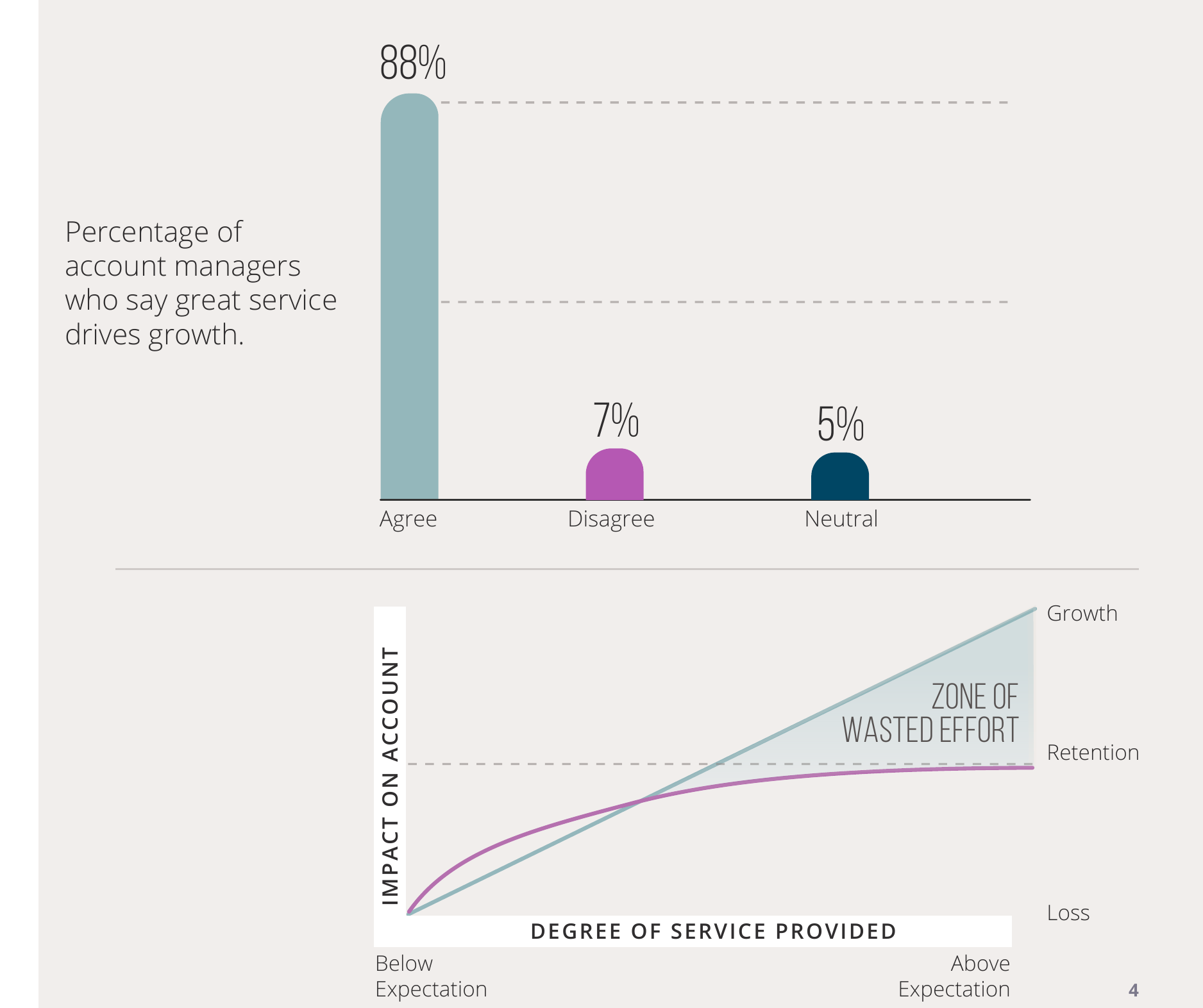
- Overinvesting in service without tying it to commercial growth puts sellers in the Zone of Wasted Effort: 88% of account managers believe great service drives growth, yet only 28% of sales leaders regularly report meeting account growth targets.
- Research from Gartner and Challenger shows that the sales experience drives the majority of B2B customer loyalty, more than product quality, brand, or price, and the biggest loyalty gains come from sellers who lead with insight rather than relationship or service alone.
- Closing the gap requires building commercial maturity to match engineering maturity: training sellers in the Six Critical Skills, giving them a shared framework — Richardson's Opportunity Vitals — for assessing deal health, and putting systems in place that track skill development and sustain behavior change over time.
Why Hidden Champions Hit a Growth Ceiling
Hermann Simon coined the term Hidden Champions in 1990 to describe companies with first, second, or third-place status in their market but little recognition outside their industry. These companies generally made less than $5 million in annual recurring revenue — the equivalent of $12 million in today's dollars — placing them squarely in the Mittelstand, the German term for mid-market businesses. Simon's research, focused on the DACH region (Germany, Austria, and Switzerland), found that Hidden Champions differentiated themselves through superior products, deep customer relationships, and engineering expertise, with a founding family and a core team driving innovation. They so drastically improved their customers' output, productivity, and workflows that they could justify a premium price in global markets — until recently.
As Simon put it, "these Hidden Champions may be small, but they are at the top of their markets. They are recognized as experts not only by their customers but also by everyone in their industries." But that industry dominance puts a cap on broader growth, because it rarely comes from broad customer acquisition or net-new applications. The positioning and delivery capacity for Hidden Champions is highly specialized, so growth primarily comes from increasing share of wallet within existing customers and carefully selected new accounts — especially in places where their brand is still largely unknown.
The dramatic improvements Hidden Champions once staked their success on quietly became incremental ones, just as globalization and growth in Asian markets made lower-cost alternatives increasingly accessible. Price-sensitive customers now prioritize convenience, pricing transparency, and digital ease of buying, and in 2026, larger, younger buying groups rely on AI tools to conduct independent research. In Salesforce's State of Sales report, 57% of sales leaders said the selling environment was more competitive than the year before, naming changing customer expectations as their top challenge — in large part because customers increasingly rely on large language models to drive purchase research, which leaves sellers selling into a black box.
Hidden Champions, known for engineering excellence rather than digital agility, are particularly vulnerable to this shift. The problem isn't the product; it's an approach to sales that's no longer relevant. The fix is to change how they sell. Richardson's own client work bears this out: Cargill saw a 30% increase in revenue among top performers after building exactly this kind of commercial maturity into its sales organization.
What Is the Zone of Wasted Effort?
Simon's research shows that 25–50% of employees at DACH-region Hidden Champions frequently interact with customers, compared to just 5–10% at larger firms, and about 70% of Hidden Champions sell only direct. That access makes it tempting for sales leaders who built their reputations on strong customer relationships to treat service as a lever for growth. But overengineering the post-sale experience with service that exceeds customer expectations will not yield returns unless account managers tie it to commercial growth.
When Challenger surveyed account managers in 2017 and 2023, 88% said they believed great service drives growth. Yet Richardson's research shows that only 28% of sales leaders are regularly reporting meeting account growth targets. Buyers no longer reward superior service or product performance with loyalty unless account managers can tie those capabilities to business impact. Over-servicing accounts without associated growth puts sellers and account managers inside what Richardson calls the Zone of Wasted Effort: service that exceeds expectations but delivers no meaningful impact on account growth.
Hermann Simon described this dynamic in a 2013 interview: Hidden Champions often build robust training programs to help customers implement complex technology, flying teams out to client headquarters and delivering training over days or weeks. But customers in developing markets in particular have told Hidden Champions, "your training is excellent. But we wish your products were less complex, so we didn't need all this excellent training." On an ongoing basis, that level of service doesn't drive growth and can even cause clients to conclude the product is too complex and choose a different solution instead.
To grow, Hidden Champions need to stop over-servicing their accounts and deliver insight as trusted advisors, backed by continued innovation and a modern commercial engine capable of tying those gains to customers' commercial growth.
What Actually Drives B2B Customer Loyalty?
When CEB, now Gartner, conducted a widescale study of approximately 5,000 individuals to determine what they look for in B2B suppliers and solution providers, they found that the sales experience drove 53% of customer loyalty. A high-quality product, an excellent brand, and reasonable pricing — even service — were merely table stakes. In 2019, Challenger revalidated this finding and went deeper: buyers cited "demonstrating unique insight," "helping me come to a decision," and "understanding and addressing different stakeholder needs" as the most-desired seller traits.
That shift toward insight-led buying has only accelerated. AI powers faster cycles of product development, positioning, and messaging, and for buyers, it triggers information overload. Buyers need a trusted advisor to help them make sense of an increasingly crowded product landscape — service and customer relationships can't differentiate in a negotiation with AI agents, and winning against them depends on adopting the right strategy and the right technology. As 6Sense's 2025 B2B Buyer Experience Report puts it, buyers now need to understand how a vendor's use of AI affects pricing, implementation timelines, and data security.
Even when product quality, service, and brand reputation are high, research shows they only yield marginal increases in loyalty. Instead, the biggest loyalty gains come from sellers who lead customers through a confident purchase journey by diagnosing pain, surfacing hidden costs, and creating urgency for change.
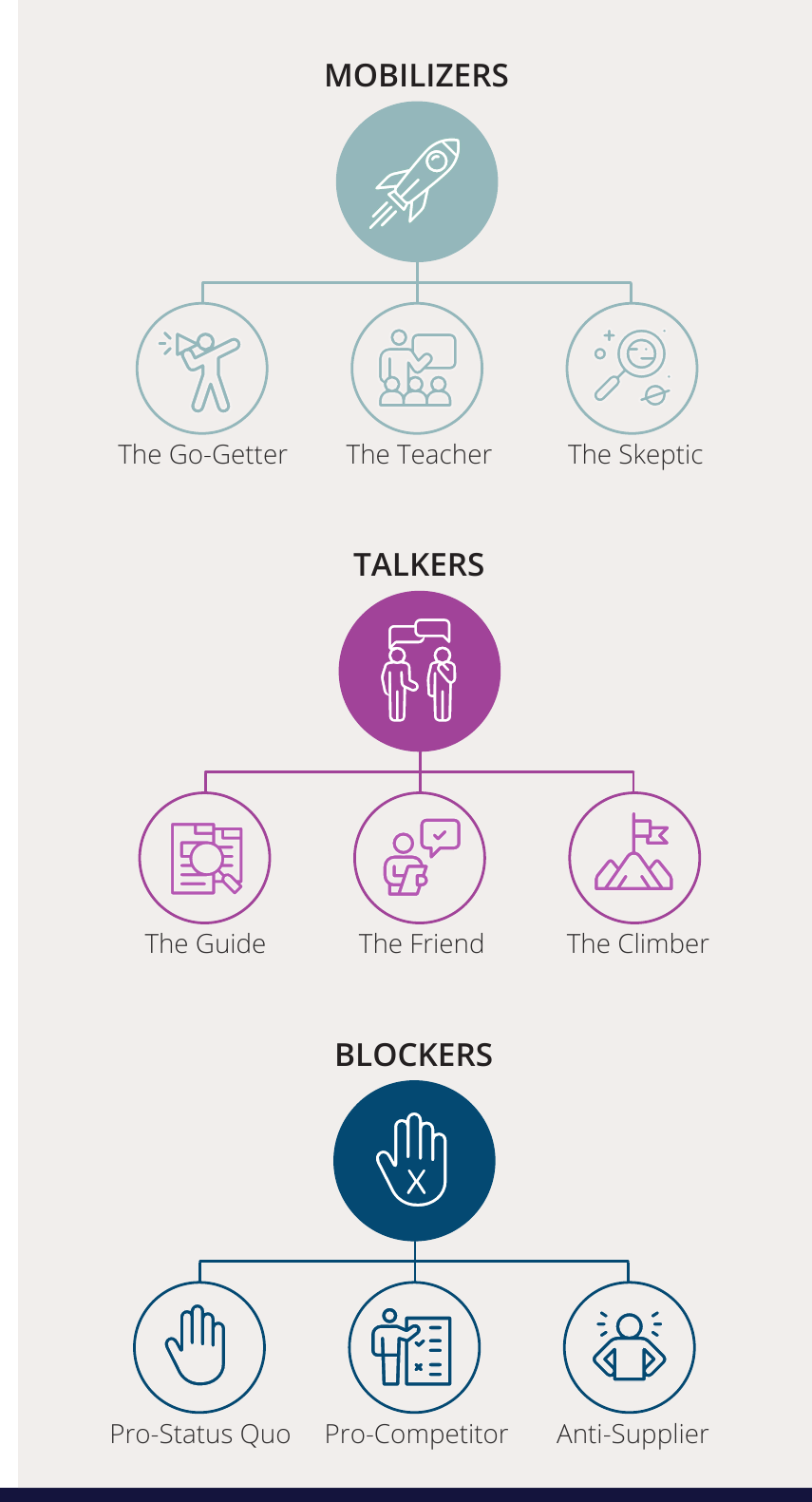
Relationship selling alone falls short here. Hidden Champions rely on customer relationships to thrive, but success in a more competitive, global economy requires expanding the stakeholder map beyond traditional contact points like operational leads or shop floor engineers — especially as global corporate competitors gain stronger C-level access. In The Challenger Customer authors Matt Dixon, Brent Adamson, Pat Spenner, and Nick Toman analyzed 700 customer conversations across 135 traits to uncover what Challengers look for when building successful relationships with customers, and found one customer profile most likely to affect change: the Mobilizer.
Mobilizers move their organizations toward consensus and build a framework for change. They're vendor-neutral, curious, and sometimes even skeptical, and they can exist at every level of an organization. Hidden Champion sellers who can spot and empower Mobilizers hold their own in a global market. Talkers and Blockers won't move a deal forward.
How Do You Build an Insight-Led Sales Organization?
Hidden Champions boast small, highly skilled teams with deep product expertise. As Simon put it, "large corporations tend to throw big budgets at a problem. Hidden Champions deploy small, dedicated teams...Hidden Champions' R&D departments are full of people who have made a specialty out of the industry and the particular company's products." Yet that product expertise doesn't automatically translate into the insight-led mentality Hidden Champions need to tackle today's sales environment.
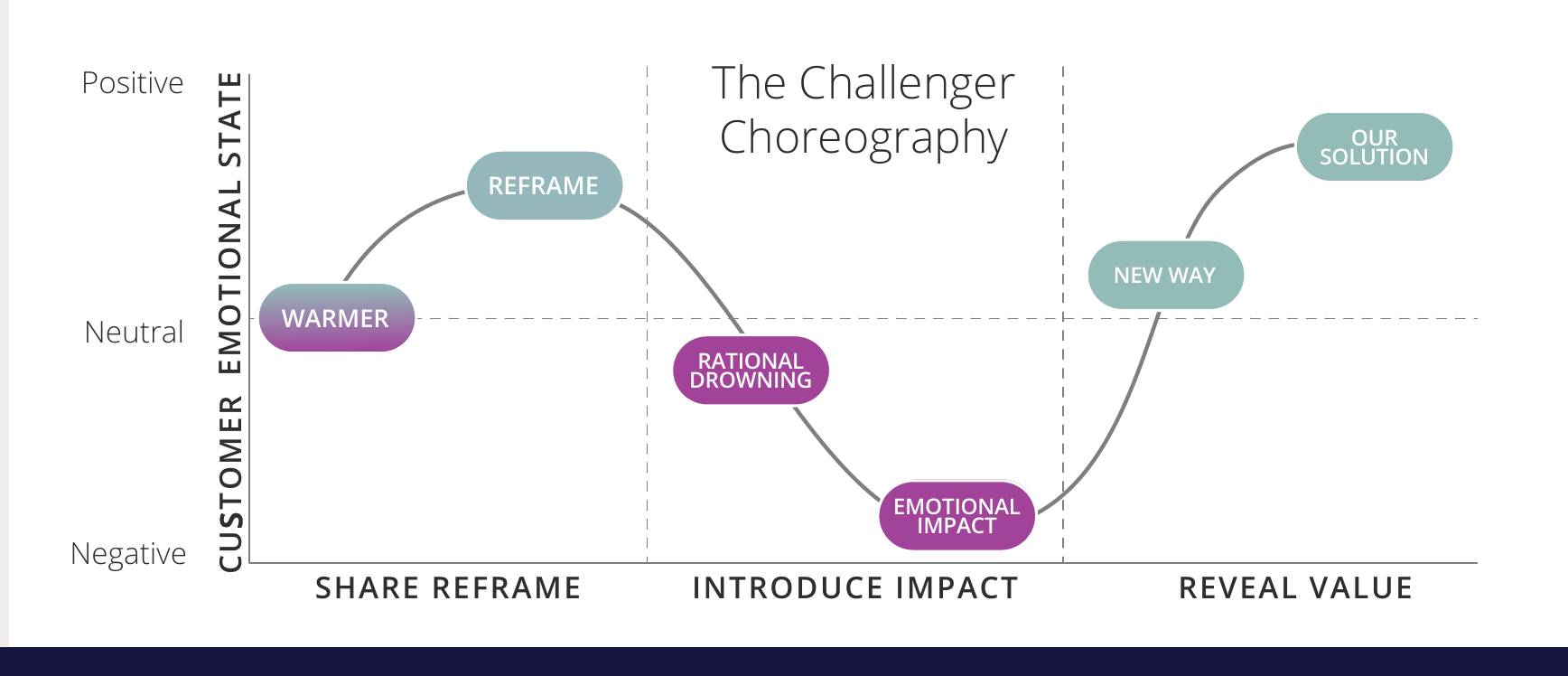
Rather than flashing features or detailing capabilities, successful sellers deliver a commercial insight that shows buyers something they've been missing and compels them to act — a shift Richardson calls the Challenger Choreography. Continued growth means leading existing accounts through this same process, too, so they grasp the ongoing business improvement new features make possible.
To build both individual skill and organization-wide consistency, sellers need training on the Six Critical Skills that enable consultative, buyer-aligned conversations: Questioning, Listening, Positioning, Presence, Relating, and Checking.
Building consistency also lets organizations forecast more accurately, even as markets and products shift. That means implementing a fact-based approach to assessing deal health and determining next steps — shifting sellers' mindset from quality and service to benchmarking buyer behavior by engaging in Richardson's Opportunity Vitals: uncovering Pain by identifying a compelling problem, accessing Power by engaging the right stakeholders, documenting a shared Vision of a solution, clearly defining business Value, and aligning Consensus across the buying group.
Cummins saw a 74% increase in closed sales reported by participants after training, and Ferguson improved trading margin by 50 basis points with 74% of participants reporting increased sales. As Patrick Klein, Sales Enablement Manager at Endress+Hauser, put it: "Richardson has helped us establish a common sales language and create greater alignment across our global sales organization. They have strengthened both selling and coaching capabilities while supporting a structured development journey for sales professionals and leaders. Their methodologies, training programs, and planning tools have contributed to both capability development and long-term behavior change."
None of this sticks without systems that reinforce it. Every seller starts from a different baseline, so the seller experience should include systems that track individualized learning needs and suggest pathways for growth tied directly to business outcomes — without them, sales leaders fly blind through training with no insight into its success. And once sellers grasp new concepts, Hidden Champions need systems that make it easy to sustain the change, aligning selling motions in tools like Salesforce to the new sales process, reinforced through a platform like Accelerate Prism. German psychologist Hermann Ebbinghaus's forgetting-curve research — since validated by a modern replication study — shows why this matters: without reinforcement, people forget the large majority of new information within days. Less friction helps new sales motions stick and ties what sellers learned to how they sell.
Hidden Champions keep their engineering strengths. They evolve their sales infrastructure to match them.
What Does Insight-Led Selling Actually Sound Like?
Here's how a trusted advisor brings an insight-led approach, instead of a product-and-service-oriented one, to a customer considering a lower-cost competitor:
The first option relies on the strength of brand, trust in service, and commitment to a complete, integrated system. The second leads with insight and positions the seller as revealing a new approach to a business challenge.
Selling Forward
Hidden Champions define themselves by their ability to think long term, embodying the principle of enkelfähigkeit — making decisions today that benefit future generations. Living up to that ideal now means rethinking how Hidden Champions sell, not just how they innovate and serve.
As Nick Hine, Global Commercial Learning Director at Veolia Watertech, put it: "We chose to extend our partnership and work with Richardson for a second three-year term. This was, in no small part, due to the superb support from the customer success team. They have worked closely with us over the past 3 years to go above excellent training and actually deliver measurable and defined commercial results that support meeting our sales goals."
Over the long term, only an insight-led approach holds up in an AI-driven economy, because buyers prefer to work with sellers who help them uncover hidden risks or strengthen commercial performance by changing how they think about their business. By building a more mature, insight-led sales culture, Hidden Champions can preserve their legacy and keep growing — earning, or earning back, their customers' trust and long-term partnership.