Selling in Consumer Packaged Goods: Four Sales Challenges and How to Overcome Them
Sales performance improvement

Written by: Ben Taylor, MBA, Content Marketing Manager, Richardson
Published: November 24, 2026
Sales channels today operate at breakneck speed. Rushed shoppers want instant gratification and value. To meet these demands, retailers have entered an analytics arms race where competitors seek to distil insights from constantly flowing data. This environment has left many consumer packaged goods (CPG) businesses wondering how their role will develop in response to these trends.
Key Takeaways
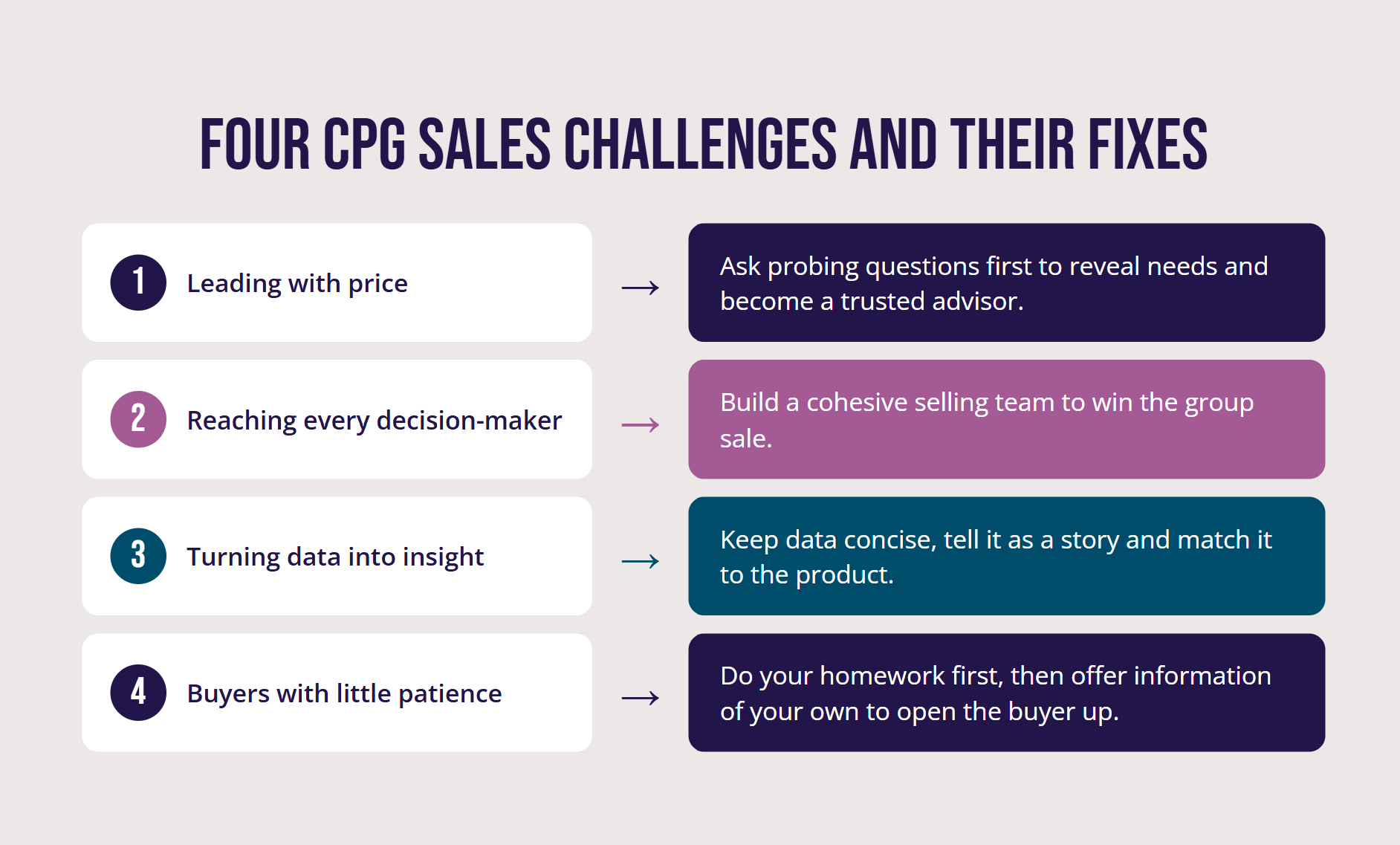
- CPG sellers face four main sales challenges: defaulting to price, reaching a growing group of decision-makers, turning data into insight, and engaging buyers who have little patience for questions.
- Sellers overcome them by asking probing questions first, selling as a team, telling a story with the data, and preparing thoroughly before every meeting.
- The sellers who differentiate, get in front of key decision-makers, deliver compelling analytics, and build a two-way relationship with buyers stand to gain the most.
Why is selling in CPG getting harder?
CPG firms are facing internal pressures to combat thinning margins. As a result, many businesses have aggressively slashed operating costs. This practice cannot continue indefinitely. Sooner or later, top-line sales must grow. However, selling isn't getting any easier.
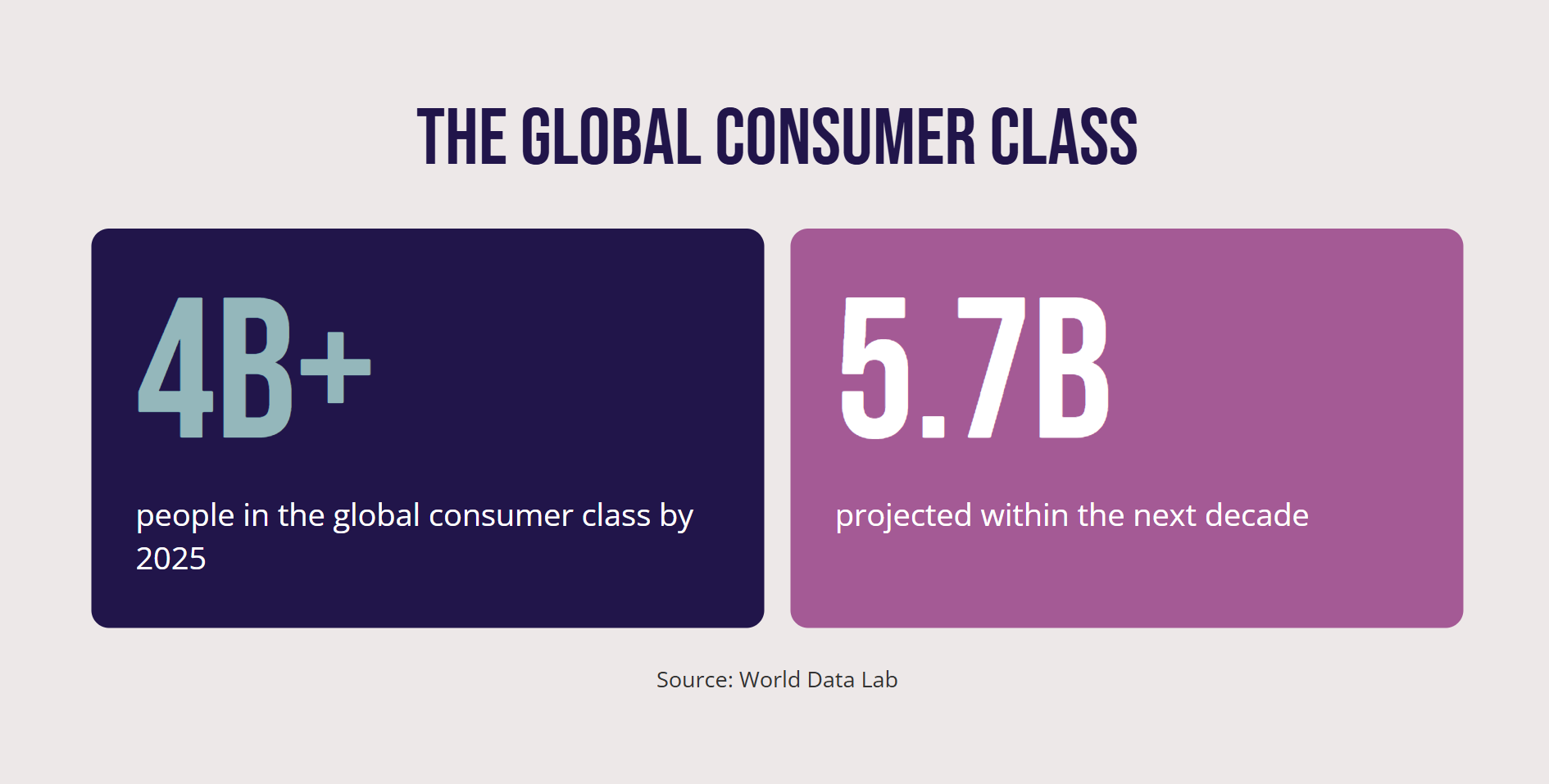
There is also real opportunity ahead. World Data Lab projects that the global consumer class will pass 4 billion people in 2025 and reach 5.7 billion within the next decade. Seizing that opportunity starts with recognising the challenges ahead and learning how to overcome them.
What are the biggest sales challenges in consumer packaged goods?
Four hurdles stand out. Each has a practical way through.
Why does leading with price hold CPG sellers back?
Sellers today feel the pressure to differentiate themselves. As a result, they jump to discussions on price to position themselves as the low-cost provider. This approach erodes profits while characterising their product as a commoditised good. It leads to an environment that's transactional rather than strategic. In short: focusing on pricing gets the seller lost in the shuffle.
What Richardson recommends: Rather than resort to pricing, start by asking the probing questions that reveal the buyer's needs. From there, the seller discovers which qualities of their product will resonate with the business. These steps work toward differentiation on both the product and personal level. The product is different because of the features that speak to the specific customer needs. The seller is different because they become a trusted advisor. Richardson's Consultative Selling training helps sellers lead conversations like this.
"When you put those behaviors into practice — questioning and listening, having facilitated sessions with coaches that actually get in there and can coach them along the way — our teams are better able to actually apply some of those behaviors in the moment with their customers." — Amber Boll, Director, Sales Global Process Owner, Rich Products Corporation
How can CPG sellers reach every decision-maker?
More buying decisions today come from groups rather than individuals. This trend has made selling more of a challenge because more stakeholders are involved. Richardson's 2026 Selling Challenges Research Study, which surveyed more than 300 sales and enablement professionals, found that for all the AI noise, the biggest challenges in sales are still human ones. Aligning stakeholders and delivering meaningful insights rank among them. A group of diverse decision-makers means sellers must confront numerous concerns and differing points of view.
What Richardson recommends: Just as buyers have developed into teams, sellers benefit from doing the same. By unifying different skill sets, sellers can engage buyers who have varied objections. The process begins by recruiting and practising with a cohesive selling team. This approach adds to the complexity of selling. However, the rewards are significant. Build a team to win the group sale.
How should CPG sellers use data with buyers?
Delivering facts is not enough because buyers today can access volumes of data without the help of a seller. Buyers also seek not only data but the compelling insights that arise from the figures. When sellers rehash raw data, they're not bringing anything new to the conversation.
What Richardson recommends: Make the information personally relatable to compel the customer to act. That takes three steps:
- Keep the data concise and relevant to the buyer's business.
- Make the data follow the trajectory of a story. Use the information to create a narrative that clarifies the problem.
- Match the facts to the capabilities of the product. Choose data that connects to your offering.
Convey confidence when using information. Avoid simply reading the facts. Tell a story to facilitate dialogue.
How do you sell to buyers who have little patience for questions?
Buyers today have less patience than ever before. Sellers are learning that engaging in a dialogue through questioning is becoming more difficult. Many buyers have become guarded when it comes to information and have a lower tolerance for questions. Without the critical information that comes from questioning, sellers are left in the dark when it's time to position the solution.
What Richardson recommends: First, prepare for reticent buyers by doing your homework. Assume questioning will be difficult, and take time before the meeting to gather as much information on the customer as possible. Next, help the customer open up by offering some information of your own. This style sets a friendly, collaborative tone that encourages a customer to share more. As you offer information, check along the way that your insights are moving in a direction that resonates with their needs.
What does it take to win in CPG selling?
Changes to the business environment have made selling more difficult, but the rewards for those who succeed are enormous. The difference lies in differentiation: get in front of key decision-makers, deliver compelling analytics, and build a two-way relationship with buyers. Sellers stand to make momentous gains as the global consumer class keeps growing. Richardson's consumer goods sales training helps sellers build these skills.
"Our team members engaged in the training, learned a lot, and we have sustained the program over the past three years with Richardson's help." — Director of Sales Enablement, consumer goods company